
Planning an office move generally requires 6 to 12 months to effectively determine the timeline for the transition, although the size and complexity of the move can lengthen or shorten this. This timeframe allows for addressing all critical steps, ensuring a seamless move with minimal disruption. In this guide, we’ll outline the essential steps to achieve a successful office relocation.

Key Takeaways

  • A successful office relocation typically demands at least 6 to 12 months of preparation to reduce stress, maintain business continuity, and manage budgets effectively.
  • Establishing a clear timeline and assigning responsibilities, along with early communication with employees, is vital for a smooth transition.
  • Hiring professional moving services and setting up a proper IT infrastructure are crucial to minimising disruptions and maintaining business operations during the move.

Why Proper Planning is Essential for a Successful Office Move

Effective planning can greatly alleviate the stress and uncertainty that often accompanies an office relocation. Imagine the chaos of encountering last-minute issues or unforeseen expenses that could have been avoided with some foresight. Planning an office move at least 12 months in advance is recommended for larger projects to streamline the process and ensure all details are considered.

An office relocation is more than just moving furniture and equipment; it involves comprehensive stakeholder management and strategic workplace strategies to ensure business continuity. Early planning and attention to detail are crucial for a successful office move, as they allow you to address potential challenges before they become problems. Setting a budget early is vital, as an office move can represent one of a business’s largest investments. A detailed budget helps avoid unexpected costs and financial surprises during the move.

Proper planning ensures the move is on time and within budget, minimising downtime and productivity loss. It’s not just about the logistics of moving but also about ensuring that your business continues to operate smoothly throughout the transition.

Careful planning, organisation, and communication are key to a smooth office relocation. Investing time in these areas guarantees a move that aligns with business goals and minimises disruptions.

Establishing Your Timeline for an Office Move

Establishing a realistic timeline is crucial. It serves as the first step in planning an office move. The office moving process can vary in length. It may take a few weeks or extend to several months, depending on the move’s size and complexity. Start preparing for an office move at least 6 to 12 months in advance to ensure a smooth transition. After finding a new office space, creating a move plan and timeline becomes essential.

A well-defined timeline helps to avoid last-minute rushes and ensures that all phases of the move are completed on time. Key steps, expert tips, and emphasising timelines can significantly contribute to a smooth and efficient relocation. One month before the move, ensure a checklist of essential tasks has been prepared. Final preparations and contingencies should be finalised one week before the move to ensure that all logistics are in order.

It’s also important to consider potential delays and remain flexible in your planning to accommodate any unforeseen circumstances. A detailed checklist helps stay organised and ensures no critical steps are missed during the move.

By establishing a clear timeline, you can manage the moving process more effectively and reduce the likelihood of unexpected issues.

Assessing Your Current Lease and New Office Lease

Understanding the terms of your current and new lease agreements is vital to prevent legal and financial complications. If your current lease isn’t up yet, consider the potential loss of deposits, repair responsibilities, and property damage liabilities. Notify your current landlord about the move as soon as you confirm the move date to ensure a smooth transition.

Be mindful of the typical notice period required by your current landlord, which can range from one to six months. Adhering to lease conditions during the decommissioning of your current office can help avoid legal complications.

Thoroughly assessing your current and new office leases ensures a seamless transition and avoids surprises.

Setting Key Dates for the Move

Before:

Identifying significant dates is crucial, including lease termination and moving day, to maintain a smooth transition. It is important to identify key dates for an office move. These dates include the current lease termination, preferred move date, new lease signing, new office build-out start and finish, and completion date. Securing the moving date early ensures the reservation with the moving company, avoiding any last-minute scheduling conflicts.

After:

Identifying significant dates is crucial for a smooth transition during an office move. Key dates to consider include:

  • Current lease termination
  • Preferred move date
  • New lease signing
  • New office build-out start and finish
  • Completion date

Securing the moving date early ensures the reservation with the moving company, avoiding any last-minute scheduling conflicts.

Update business services like utilities and cleaning to reflect the new office address. Setting and adhering to key dates allows for effective coordination and timely arrangements.

Creating a Detailed Budget

Before:

Setting a budget in advance helps manage expected expenses and prepares for unforeseen costs. When relocating an office, there are several clear costs to factor in. These include expenses for removal firms, security deposits, rent, interior design fees, and new furniture. An estimated relocation budget should include all potential expenses related to the office move.

After:

When relocating an office, there are several clear costs to factor in:

  • Expenses for removal firms
  • Security deposits
  • Rent
  • Interior design fees
  • New furniture

An estimated relocation budget should include all potential expenses related to the office move.

Identify non-negotiables and potential areas to scale back to save money when setting a budget for an office move. The purchasing process during the office move should clearly define who will make the purchases and how vendors will be paid.

The office relocation project manager should have decision-making authority and experience in managing budgets. Periodically reviewing the relocation budget ensures that it stays on track as expenses arise.

Assembling Your Office Relocation Team

Creating your moving team very early in the office relocation process is crucial for effective planning. Begin planning with the office relocation manager three to four months before the moving date to handle logistics smoothly. Assign responsibilities clearly to each team member, defining their specific roles to handle logistics for the move.

Including members from various departments in an office relocation committee helps to ensure effective oversight and communication during the move. Provide team members with essential information such as access codes, keys, floor plans, and emergency contact details.

Utilising a good office move manager can streamline logistics and planning for the relocation. Select departmental ‘move champions’ to facilitate adaptation and assist with the transition in larger organisations.

Appointing a Project Manager

The role of a project manager in an office relocation is to coordinate tasks and ensure efficient communication. A project manager is responsible for overseeing the moving process, ensuring that all tasks are completed on schedule and within budget.

The in-office move coordinator should possess strong organisational skills and the authority to make decisions regarding the move. Selecting a great organiser with decision-making authority as the project manager is critical to the success of the office move.

Assigning Specific Responsibilities

Before moving day, employees should be encouraged to pack gradually to reduce last-minute stress. Gradual packing allows employees to manage their workload without added pressure as the move date approaches. Allocating tasks to team members is crucial for a streamlined office move. Effective communication and clear role definitions are essential for a successful move.

Each team member should have a specific role and responsibilities, such as packing, coordinating with the moving company, or setting up the new office space. By clearly defining these roles, you can ensure that everyone knows what is expected of them and that nothing is overlooked during the move.

Communicating with Employees About the Upcoming Move

Communication of the move to employees helps minimise anxiety and ensures a smoother transition to the new workspace. Regular communication with employees about the move helps maintain morale and prepares them for changes in work arrangements. A transparent communication plan makes employees feel involved and reduces anxiety during relocation.

Inform employees about the moving date, new office address, and changes to their daily routines. Proper communication with internal and external parties should be prioritised during the 3-6 months before moving day. Keeping employees informed during an office move is important as it maintains morale and minimises disruption.

Announcing the Move Early

Announce the move early and provide regular updates to reduce employee uncertainty and anxiety. The initial email announcement to employees must include several important details. These include the new office address, the moving date, key features of the new office, the reason for the move, and key dates for the moving process. Early notifications about the office move should inform employees of the relocation date and specific reasons, helping them adjust and prepare.

Notify relevant groups such as clients, suppliers, and service providers about the office move to keep them informed. Communication about the move should begin once the moving date is decided, and follow-up meetings can be held for feedback and questions.

Providing relocation guides and support can assist employees in adapting to the new office environment at our new office location.

Addressing Employee Concerns

Engage employees throughout the move by encouraging them to keep the relocation in mind when planning or taking on new projects. Invite employee input on the new office layout and amenities to make them feel valued in the planning process. Allow employees a few hours off the day before the move to reduce stress and improve morale.

Acknowledge employee requests for changes in workspace needs or work style preferences during the move. Take into account employees’ health restrictions for lifting boxes to avoid injuries. Ensure employees have the necessary packing supplies to facilitate the packing process.

Encourage employees to pack a little bit at a time to make the process more manageable.

Preparing for the Physical Move

Address health restrictions to ensure safety, especially for those who may struggle with physical tasks. Coordinate loading and unloading times to avoid conflicts and ensure an efficient relocation. Essential supplies such as boxes, crates, tape, and labels are needed for packing during an office move. If there is insufficient space for certain items during the office move, consider reserving a commercial storage unit near the new office. Alternatively, your office moving company may well be able to supply storage, often at a cheaper rate than commercial sotrage facilities.

Clear a path and moderate the move on moving day to assist the movers effectively. Disconnecting, transferring, and setting up tech and utilities are technology tasks necessary during an office move. Review the moving schedule and tasks with the team on moving day to ensure smooth operations. Before the move, notify current vendors to discontinue or transfer their services. Ensure utility services such as internet and phone are set up at the new office prior to your moving day.

Arranging for parking space permits and local licenses well in advance can help avoid delays on moving days. Everything should be packed and ready for relocation by the day before the office move. On a moving day, you should feel well-prepared to handle any unexpected issues.

Collect all necessary items such as company keys, parking passes, and access cards before the office move. Pack non-essentials early before the office moves to streamline the process.

Conducting an Inventory Check

Create an inventory of all items, label equipment, and conduct a stock check. Labelling equipment during inventory checks ensures items are easily recognisable and organised. Conduct a final stock check before moving day to confirm that all items are accounted for.

This step is crucial to avoid any last-minute confusion and ensure that everything is in order. A detailed inventory will help you keep track of all office supplies, furniture, and equipment during the move, making the unpacking process more efficient.

Downsizing and Decluttering

Items that are no longer needed should be purged and can be tagged for sale or donation. Downsizing and decluttering streamline the moving process and reduce the costs of transporting unnecessary items. Consider evaluating items based on their usage and necessity. If they haven’t been used for a certain period, they may not be essential.

Decluttering not only helps in reducing the physical load of the move but also creates a more organised and efficient new workspace. By getting rid of non-essential items, you can make the transition to the new office space smoother and more stress-free.

Engaging Professional Help for Your Office Move

Hiring professional movers simplifies and makes the process more efficient. Professional movers enhance efficiency and minimise stress during the move. Services provided for office moves include packing, moving, deconstruction, and reconstruction.

Clients can expect a unique and personalised moving service from professional moving companies. An effective office move team should include an internal project manager, a property solicitor (depending on the scale and complexity of the move), an IT specialist, and a removal team.

Choosing a Reliable Office Moving Company

Choosing a dependable office moving company is essential. It plays a crucial role in ensuring the success of your relocation.

When choosing a moving company, consider:

  • Referrals
  • Reviews
  • Professional accreditation
  • Licensing
  • Insurance

Additionally, look for a removal service provider who is a member of the British Association of Removers and holds the BS8522 accreditation, the British Standard certification for commercial moving services. This ensures a high level of professionalism and adherence to industry standards.

Verify that any hired moving company is properly licensed and insured. Get at least three quotes to compare when selecting a moving company.

A clear idea of your moving budget early on is helpful when talking to moving companies. Decide on the type of moving company that meets your needs before creating your project plan. It’s important to select the best full-service office movers as part of your project plan. The moving company needs to have public liability insurance. Additionally, it should also provide goods in transit cover.

A full-service mover assigns a professional move coordinator to oversee the relocation. This person manages all the details involved in the physical move. Confirming the move date with your moving team ensures coordination of moving logistics.

Understanding Moving Insurance Options

Public liability and goods in transit coverage are essential types of insurance for office relocations. Any damage noticed post-move should be reported promptly to the moving company. A removal and storage insurance policy can provide extra coverage during an office move. Moving insurance is essential to protect your office assets from potential damage during the move.

Understanding moving insurance options and ensuring adequate coverage provides peace of mind during relocation. It ensures that any potential losses or damages are covered, allowing you to focus on other aspects of the move.

Ensuring Business Continuity During the Move

Following a suggested timeline minimises unnecessary stress during the office move. Careful planning and communication maintain business operations during an office move. Key strategies to minimise disruption include planned actions to ensure business operations continue smoothly. It’s important to recognise that moving can be stressful for employees, which may impact daily operations.

Once moving day arrives, you will relocate to the new office. This will allow you to set up and get back to business promptly. The main focus after moving day should be on getting the last few things set up to resume business operations. By prioritising business continuity, you can ensure that your business remains fully operational during and after the move.

IT and Technology Considerations

Planning for IT and telecom systems involves transferring services and ensuring the new office has adequate infrastructure. Start the tech move as early as possible to minimise disruptions. Involving IT professionals ensures a smooth setup and minimises disruptions.

Relocation of IT infrastructure is critical for minimising disruption during the office move. Disconnecting and reconnecting tech equipment is a major complication when moving to a new office space. Plan regarding whether the IT team can set up computers internally or if outside help is needed.

Conducting a cybersecurity risk assessment before the move is crucial for protecting sensitive company data. The in-house IT team or serviced office IT relocation team should be appointed to set up IT equipment during the move.

Setting Up the New Office Space Efficiently

Consider IT capabilities, facilities, utilities, and infrastructure when planning the office floor layout. Blueprint the office space and consider layout changes before finalising. Make adjustments to the original office floor plan as needed, utilising a color-coding and numbering system for the organisation. Include a redesign of office style, reorganised layouts, and revamped furniture in your relocation plan to streamline the process.

The impact of office decoration and lighting significantly affects employee engagement and retention. Considering employee workstations and collaborative spaces in the new office layout is vital for productivity. By planning the new office setup efficiently, you can create a workspace that promotes productivity and employee satisfaction.

Post-Move Checklist for a Smooth Transition

A thorough post-move checklist is crucial for ensuring a smooth transition into the new office environment. Essential tasks include verifying the delivery condition of office furniture and equipment upon arrival.

It’s important to ensure all employees have access to their new workstations promptly after the move. Confirming that all technological devices are functioning properly is a key step after moving.

Unpacking and Organizing

Unpacking should be systematic to ensure that all items are placed correctly according to a pre-planned layout. Tasks assigned to the post-move team include removing tags, unpacking, stocking kitchen and restrooms, and stocking supply cabinets. After unpacking, it’s crucial to test phone systems, computers, servers, and printers to ensure technology is operational.

Designated zones for paperwork and office supplies help maintain organisation after unpacking. Efficiently organising the new office space ensures a smooth transition and a productive work environment.

Updating Your Company Information

You should start updating documents with your new address as soon as you know your new address. Update marketing materials like the website, online citations, brochures, stationery, and business cards to reflect your new office address. Confirm that you notify everyone of the move, update your online presence, and adjust stationery accordingly.

Promptly updating your company website information ensures clients, suppliers, and stakeholders are aware of your new location. This helps maintain business continuity and prevents any confusion or disruption in communication.

Summary

In summary, proper planning, clear communication, and engaging professional help are crucial for a successful office move. By establishing a realistic timeline, creating a detailed budget, and assembling a dedicated relocation team, you can streamline the moving process and minimise disruptions. Communicating with employees and addressing their concerns ensures a smooth transition and maintains morale.

Following the steps outlined in this guide will help you navigate the complexities of an office relocation and ensure a successful move. From planning your office move to setting up the new space efficiently, these strategies will support your business goals and create a productive work environment. Embrace the change and look forward to the opportunities that come with your new office space.

Frequently Asked Questions

Relocating your servers is a multifaceted endeavour that demands meticulous planning to avoid interruptions to your operations. Our server relocation checklist encapsulates every essential phase, from preliminary planning and asset inventory to post-move system testing. Adhere to our guide to guarantee a seamless server relocation with minimised downtime.

Key Takeaways

  • Formulate a detailed server relocation strategy encompassing timelines, budgets, roles, and backup plans to ensure a well-organised and effective move.
  • Execute a comprehensive inventory of all hardware and software, documenting essential specifics to avert loss and confusion throughout the relocation.
  • Emphasise effective communication with stakeholders and collaborate with internet service providers to ensure connectivity requirements are met for a smooth transition.

Develop a Detailed Server Relocation Strategy

The foundation of any successful data centre relocation is a meticulously crafted server room relocation strategy. This plan should clearly articulate key goals, including the timeline, budget, and other vital components. A detailed timeline with specific tasks and deadlines is crucial for maintaining project momentum. Ensure the budget encompasses all facets, including hardware upgrades, networking enhancements, and vendor services.

Assigning roles and responsibilities is equally crucial. A dedicated project manager should oversee the relocation project to meticulously manage every detail. Clearly defined roles enable each team member to understand and appreciate their tasks and responsibilities, facilitating coordination and minimising confusion for the IT team.

Contingency plans are indispensable. Backup plans for various scenarios can mitigate risks and ensure a smoother transition if complications arise. Keeping everyone informed through a comprehensive communication plan enhances the likelihood of a successful relocation.

Conduct a Thorough Inventory of Hardware and Software

Conduct a comprehensive inventory of all existing hardware and software before relocating your servers. Often neglected, this step is essential for a successful data centre migration. A complete equipment inventory and necessary backups help prevent complications during the move.

There are multiple methods for inventorying your assets, including manual or software-based, or a hybrid combination of the two. Regardless of the approach, maintaining a detailed record of all hardware and software components is crucial. Document existing hardware and software settings, including condition, size, weight, and serial numbers, prior to relocation.

Log the condition and ownership of each asset during the inventory process. Document the configurations and connections of all components to maintain access to critical information during relocation. Identify components that will be replaced or upgraded during the move. A comprehensive inventory minimises the risk of losing items during transfer. Include infrastructure and applications in your inventory for a complete evaluation.

Backup Data and Systems

Backing up data and systems is a critical step in any data centre relocation. Backups minimise the risk of unexpected data loss. A well-structured backup strategy ensures all critical data is captured before the move, preventing data loss.

Testing backups before relocation verifies their integrity and reliability during emergencies. This step mitigates risks and protects against data loss or corruption. Maintaining multiple backup copies in different locations is another best practice. This strategy protects against localised incidents that could compromise your data.

It’s advisable to keep at least two copies of your backup in different locations. Following these steps ensures data protection and smooth business operation with minimal downtime during relocation.

Evaluate New Location Requirements

Evaluate the site’s space, power, and temperature needs before relocating your servers. Check for redundancy in power supplies and cooling systems during infrastructure assessments to ensure high availability. A thorough site evaluation identifies potential infrastructure challenges, ensuring the new data centre supports operational demands.

Adequate physical security measures at the new site are critical for protecting sensitive data and equipment. Compliance with local regulations on data storage and processing is another key factor when evaluating a new data centre location. The new data centre’s design should accommodate growth, including plans for increased power capacity and additional cooling solutions.

Verify connectivity to essential services, including internet and power, to prevent operational disruptions post-relocation. Identify potential issues and determine IT infrastructure requirements, including Cat 5/6 cables, phone lines, and power outlets, during a site visit. Conduct this visit 2-3 months before moving to ensure all requirements are met in advance.

Coordinate with Internet Service Providers

Coordination with internet service providers (ISPs) is crucial in the relocation process. Contact ISPs well in advance to arrange network connectivity. Reach out to ISPs about two months before the move and network carriers at least 30 days in advance.

Review connectivity requirements to ensure alignment with the new site’s architecture. Verify the new office meets line capacity needs to support the expected network load.

Update contact information with IT service providers and technology vendors to inform them about the new location. This proactive approach secures the necessary services for a smooth transition.

Communicate with Stakeholders

Effective stakeholder communication is vital for a successful server relocation. Establish a communication plan with specific channels and frequency tailored to stakeholder preferences. Engage stakeholders early and provide consistent updates on the migration timeline and potential impacts.

Use various communication tools, such as emails, newsletters, and meetings, to ensure information reaches all stakeholders. Include feedback mechanisms that allow stakeholders to voice concerns and provide input throughout the migration process.

Recognising stakeholder contributions and successes fosters positive relationships during relocation. Document all communications and decisions to maintain transparency and accountability.

Secure Packaging and Transport

Securing IT equipment for transport is crucial for data protection and a smooth transition. Use secure packaging materials like anti-static foam and anti-static bubble wraps or bubble bags and sturdy boxes for transporting IT equipment. Custom crates designed for specific server sizes enhance protection during transport. Bubble wrap is commonly used for its cost-effectiveness and flexibility in cushioning server racks.

Shipping blankets help absorb impacts during transit, providing additional protection for server equipment. Cardboard or foam corners provide vital edge protection during shipping. Vehicles with air-ride suspension ensure safe transport of server equipment.

Label and pack IT equipment securely. Ensure safe transport and arrival at the new location without any issues. This careful approach minimises disruption and maximises data protection during relocation.

Prepare the New Site

Preparing the new site in advance ensures a smooth transition. Setting up new networks in advance reduces troubleshooting time during migration. Updating rack diagrams before the move ensures clarity in equipment setup and prevents potential confusion.

Create detailed port assignment lists to streamline reconnections after moving equipment. A clear understanding of the target server area layout is essential for effective network and power management. Thorough preparation for the new environment ensures a seamless transition and quick IT infrastructure setup.

Test and Validate Systems

After equipment placement, test and validate your systems. A test migration ensures seamless relocation by validating the new environment. Validation checks during relocation ensure network, compliance, and security requirements are met. Reconfigure transported and new IT equipment as per new requirements after verifying arrival.

Validate performance, security, and resilience in the new data centre before going live. Monitor hardware, software, and other components to ensure optimal IT performance post-relocation. Test all hardware, software, network devices, and phone lines to confirm correct functionality in the new location. Address any issues encountered during IT infrastructure testing promptly to ensure functionality.

Transition to the new production environment involves changing networking traffic policies and modifying IP addresses, URLs, or hard-coded routing data after tests pass. Post-relocation testing ensures systems behave as required. This thorough approach helps troubleshoot issues early, ensuring a smooth transition.

Update Documentation

Post-relocation, updating documentation is critical. Documentation during server relocation helps teams think through the process and keeps all stakeholders informed. Accurate documentation prevents errors during system operations post-relocation.

After moving IT infrastructure, revise documentation to reflect the new configuration. Document all changes made to the infrastructure during relocation in real time to maintain accuracy. Ensure all relevant stakeholders have access to updated documentation to keep everyone informed post-relocation.

Regular documentation audits ensure ongoing accuracy and relevance in the new environment. Incorporating user feedback on documentation aids in identifying areas needing clarification or additional detail.

Post-Migration Review

Conduct a thorough review of the migration process post-migration. Post-migration reviews aim to optimise future migrations and IT projects. Post-migration management should involve proactive monitoring to confirm system functionality. Gathering staff feedback on performance post-migration is crucial for identifying operational issues.

Involving stakeholders in post-migration assessments helps identify operational challenges and successes. Insights from post-migration reviews can inform improvements for future data centre moves. Documenting lessons learned post-migration enhances future data relocation strategies.

Considering Universal Commercial Relocation Services

Utilising Universal Commercial Relocation’s professional services for server relocation can significantly enhance efficiency and reduce costs. Their experienced team can mitigate the risks associated with server migration, ensuring a smooth transition. By leveraging Universal’s comprehensive relocation services, businesses can achieve a quicker return to full operational capacity while focusing on their core operations.

Universal Commercial Relocation offers end-to-end solutions, assisting with everything from planning and inventory management to transportation and setup. It is highly recommended that businesses seek a seamless and efficient relocation process to engage their services.

Summary

Relocating your servers is a multifaceted task that demands meticulous planning and execution. From developing a detailed server relocation strategy to conducting a post-migration review, each step is crucial for ensuring a seamless transition. By following this comprehensive checklist, you can minimise downtime, safeguard your data, and ensure a smooth migration.

Remember, the key to a successful server relocation lies in preparation and communication. Engaging with stakeholders, coordinating with service providers, and considering professional services can significantly enhance the relocation process. With this guide, you’re well-equipped to tackle your server relocation project with confidence and ease. Ready to make your move?

Frequently Asked Questions

Wondering how to get rid of confidential waste securely in the UK? Proper disposal of sensitive documents like personal data, financial records, and legal papers is essential to prevent data breaches and comply with UK laws. In this guide, we’ll explore the key methods and best practices for handling confidential waste in the UK.

Key Takeaways

  • Managing confidential waste in the UK requires secure disposal methods for personal data, financial records, and legal documents to prevent identity theft and ensure compliance with regulations.
  • Utilising professional shredding services, including on-site and off-site options, is crucial for the secure destruction of sensitive documents and maintaining regulatory compliance in the UK.
  • Implementing a confidential waste disposal policy, which includes staff training and regular audits, is vital for protecting sensitive information and meeting legal obligations such as GDPR compliance in the UK.

Identifying Confidential Waste

Confidential waste encompasses documents containing sensitive information, and improper disposal can lead to identity theft or data breaches. In the UK, getting rid of confidential waste involves managing various types of data, including personal data, financial records, and proprietary information.

An efficient, confidential waste management system ensures compliance with UK regulations and safeguards sensitive information from unauthorised access.

Personal Data

Personal data includes sensitive information such as names, addresses, phone numbers, National Insurance numbers, medical records, employee files, and application forms. Documents containing personal details, whether they belong to employees or clients, need to be shredded to protect privacy and comply with data protection laws like the General Data Protection Regulation (GDPR).

Financial Records

Financial records are another category of sensitive documents that require secure disposal. These consist of bank statements, credit card information, tax returns, and financial reports. These documents offer a detailed view of one’s financial situation. Securely destroying these documents prevents data breaches and unauthorised access to sensitive information.

Legal Documents

Legal documents, such as contracts, litigation materials, and legal correspondence, contain highly sensitive information that must be securely disposed of to prevent unauthorised access. Securely destroying these documents protects confidential information and ensures legal compliance in the UK.

Methods for Secure Disposal of Confidential Waste

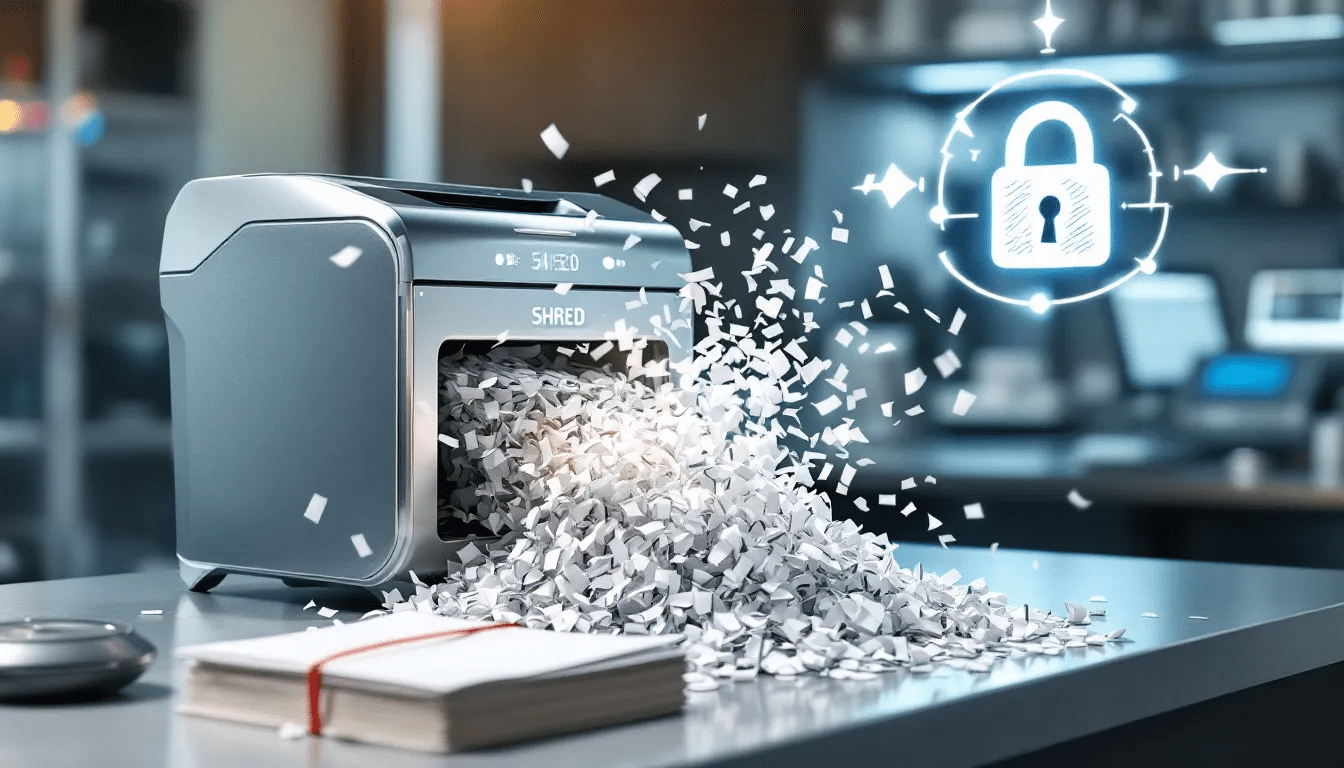
A professional shredding machine in action, securely disposing of confidential waste.

Secure disposal of documents containing confidential information is crucial to protecting sensitive data and ensuring compliance with UK regulations. Various methods can be employed to dispose of confidential waste securely, including shredding, destroying digital media, and using secure bins and containers.

These methods ensure that managing confidential waste is conducted securely and responsibly.

Shredding Paper Documents

Shredding paper documents is one of the most effective methods for protecting sensitive information and preventing unauthorised access. Cross-cut or micro-cut shredders offer higher security than strip-cut shredders, making it harder to reconstruct shredded pieces. For businesses, employing professional shredding services ensures that documents are destroyed securely and in compliance with UK regulations.

Shredding companies or companies such as Universal and its sister company, Information Storage Solutions, that offer Document Destruction Services, often as part of a workplace relocation project, can provide reliable disposal solutions for both personal and office use. They provide various services, including one-time shredding for large volumes of documents and regular collection services for ongoing needs. These services help businesses manage confidential waste effectively and protect sensitive information from unauthorised access.

Destroying Digital Media

Secure destruction of digital media is essential to prevent data breaches. This practice is as important as shredding paper documents. Items such as CDs, USB drives, and hard drives must be destroyed properly to ensure that data cannot be recovered.

Methods for destroying electronic media include degaussing, crushing, and using specialised shredders designed for digital media.

Using Secure Bins and Containers

Lockable and tamper-proof containers prevent unauthorised access to confidential waste. Fire-resistant, regularly emptied bins and containers maintain security.

Lockable cabinets and designated storage areas play a crucial role in securely storing confidential waste until it can be properly disposed of.

Choosing Professional Shredding Services

Shredding services from reputable companies in the UK ensure the secure destruction of confidential documents. These companies offer both on-site and off-site shredding options, providing flexibility and convenience for businesses.

Choosing a shredding company with a solid reputation and reliable references ensures proper disposal of confidential waste.

One-Time Shredding Services

One-time shredding services are designed for UK businesses needing occasional disposal of large volumes of confidential waste. These services can be tailored to meet specific needs, ensuring secure disposal of sensitive information and compliance with data protection regulations.

Utilising one-time shredding services helps businesses manage their confidential waste effectively and avoid potential data breaches.

Regular Collection Services

Regular collection services ensure UK businesses can manage their confidential waste consistently and securely. These services help maintain compliance with data protection regulations and reduce the risk of unauthorised access to sensitive information.

Such services are integral to a comprehensive, confidential waste management strategy.

Alternative Methods for Disposing of Confidential Papers

When shredders are not available, there are alternative methods for disposing of confidential documents to ensure secure disposal. These methods include soaking and pulping, incineration, and manual tearing. While these methods may not offer the same level of security as shredding, they can still be effective in preventing unauthorised access to sensitive information.

Soaking and Pulping

Soaking documents in water turns them into pulp for safe disposal. This method involves placing the papers in water for one to two days until they dissolve into a pulp.

Adding bleach speeds up the process, but always wear protective gloves to avoid accidents.

Incineration

Incineration securely disposes of confidential paper documents, preventing unauthorised access. A designated paper incinerator bin ensures safe burning to destroy paper documents.

Before incinerating documents, it is important to check local regulations to ensure compliance with UK laws governing the burning of waste.

Manual Tearing

Manual tearing or cutting is an inexpensive method for destroying confidential documents when shredders are unavailable. However, it should be considered a last resort, as pieces can still be reconstructed easily, making it less secure than shredding.

However, more secure disposal methods are preferable to ensure confidentiality.

Storing Confidential Waste Securely

Securely storing confidential waste protects sensitive information until proper disposal. UK businesses should contact service providers for secure storage solutions tailored to their needs regarding confidential business waste.

Locked cabinets and designated bin areas maintain organisation and limit potential breaches.

Using Locked Cabinets

Locked cabinets prevent unauthorised access and maintain document confidentiality. Lockable wheelie bins are recommended for securely storing confidential waste. This secure storage method is vital to protect sensitive information from unauthorised access.

Designated Storage Areas

Designated storage areas prevent unauthorised access to confidential waste. Bins, bags, or cabinets storing confidential waste are monitored monthly to maintain security and prevent overflow. Designated storage areas prevent unauthorised access to confidential waste. Monthly monitoring of bins, bags, or cabinets storing confidential waste maintains security and prevents overflow.

Implementing a Confidential Waste Disposal Policy

An office environment implementing a confidential waste disposal policy with visible secure bins.

A confidential waste disposal policy in the UK outlines procedures for handling and disposing of confidential documents. Such a policy mitigates the risk of paper-based security breaches and ensures compliance with data protection regulations.

Employee training on disposal practices and regular audits are crucial components of a robust disposal policy.

Staff Training

Training employees on secure disposal methods ensures compliance and protects sensitive data. Regular training sessions ensure staff understand disposal procedures and the implications of mishandling sensitive data.

Such training sessions maintain a secure and compliant workplace.

Regular Audits

Regular audits ensure compliance with the confidential waste disposal policy. Clear procedures for handling confidential materials and monitoring bin fill levels maintain security.

Regular audits identify gaps in the disposal process and ensure adherence to data protection standards.

Regulatory Compliance and Legal Obligations

Compliance with data protection laws prevents data breaches and protects sensitive information. Regulations such as the GDPR require secure disposal of confidential waste to protect personal data. Adherence to these regulations avoids hefty fines and maintains client and customer trust.

GDPR Compliance

The Data Protection Act and General Data Protection Regulation (GDPR) mandates secure handling and disposal of personal data to prevent data breaches. Fines for breaching GDPR can reach up to 4% of annual worldwide turnover or £17.5 million.

Businesses must implement secure disposal practices to avoid fines and protect sensitive data from unauthorised access.

Avoiding Data Breaches

Preventing data breaches safeguards sensitive information and maintains trust. Secure disposal practices, such as shredding and using secure bins, also prevent unauthorised access to confidential documents.

Ensuring paperwork and e-mails aren’t sent to the wrong recipients and secure storage are essential to prevent unauthorised access and avoid data breaches.

Environmental Considerations in Confidential Waste Disposal

Shredding documents not only protects sensitive information but also supports environmental sustainability by enabling recycling and reducing the carbon footprint. Confidential materials processed at a mill are transformed into new paper products, contributing to natural resource conservation and pollution reduction.

Eco-friendly practices in confidential waste disposal help to rid of confidential waste and reduce environmental impact.

Recycling Shredded Paper

Recycling shredded paper reduces waste and supports sustainability efforts. Choose shredding services with energy-efficient features and recycling capabilities.

Incorporating recycling into waste management enhances environmental responsibility.

Energy Recovery

Energy recovery converts confidential waste into usable energy, an environmentally responsible disposal method. Shredding companies utilise eco-friendly practices to ensure that no waste is sent to landfills. Energy recovery converts confidential waste into usable energy, an environmentally responsible disposal method.

Energy recovery and recycling reduce environmental impact and support sustainable waste management practices.

Summary

In summary, managing confidential waste securely is an essential aspect of protecting sensitive information and complying with data protection regulations. From identifying different types of confidential waste to exploring secure disposal methods and choosing professional shredding services, there are numerous steps involved in ensuring the proper destruction of sensitive documents. Additionally, implementing a confidential waste disposal policy, conducting regular audits, and considering environmental impacts are crucial components of a comprehensive waste management strategy. By following the guidelines outlined in this guide, businesses and individuals can effectively protect their sensitive information and contribute to a sustainable environment.

Frequently Asked Questions

Planning an office move can be challenging, but with the right steps, it’s very achievable. This guide on how to plan an office move project will help you navigate through key stages such as creating timelines, forming a moving team, conducting inventories, and managing IT systems. Let’s dive in to make your office move seamlessly and efficiently.

Key Takeaways

  • Establishing a clear timeline with key milestones is essential for a successful office move, helping to coordinate various aspects and minimise disruptions.
  • Forming a dedicated moving team with assigned roles ensures accountability and streamlines the relocation process.
  • Effective communication with stakeholders and strategic packing is crucial to maintaining business continuity and ensuring a smooth transition to the new office.

Step 1: Establish a Clear Timeline

A project manager planning an office move timeline with a checklist.

The foundation of any successful office move is a detailed and well-thought-out timeline. Start by creating an office move timeline that outlines key milestones and deadlines. This timeline should include your move-out and move-in dates, along with sufficient time allocated for packing, transportation, and setup.

Consider critical factors such as lease agreements, potential downtime, and the availability of your new office space to avoid any last-minute surprises. Addressing these elements early in the planning process ensures a smoother transition.

A clear timeline keeps your team on track and coordinates all aspects of the move effectively. This guide helps you plan your office move meticulously, minimising disruptions and maximising efficiency.

Step 2: Form a Dedicated Moving Team

An office move requires a dedicated team to manage and oversee the relocation process. Begin by assembling a team of reliable individuals who will take charge of different aspects of the move. This team should include representatives from various departments to ensure a comprehensive approach.

Assign specific roles and responsibilities to each team member to ensure accountability and efficiency. A project manager should lead the team, coordinating efforts across departments and acting as the central point of contact throughout the move. This organisational structure helps streamline the office moving process, making sure nothing falls through the cracks.

A committed moving team helps tackle the complexities of office relocation more effectively. This approach distributes the workload and ensures every detail is attended to, paving the way for a successful office move.

Step 3: Conduct a Comprehensive Inventory

Before you start packing, conduct a comprehensive inventory of all office assets. This includes furniture, equipment, supplies, and any other items that will be moved. A detailed inventory helps you keep track of everything, preventing losses or confusion during the move.

Identify which items need to be moved, replaced, or discarded. This step is crucial in decluttering your office and ensuring that only necessary items are transported to the new location. A thorough inventory is a crucial part of your office move checklist, aiding in a smoother transition.

Step 4: Choose the Right Relocation Partner

A team discussing options for choosing the right relocation partner for an office move.

Choosing a reliable moving company is essential for a successful office move. An experienced moving company can significantly ease your relocation woes. Research and compare different office relocation service providers to find one that meets your specific requirements.

Search for moving companies with a proven track record, positive reviews, professional affiliations and accreditation. These factors indicate a reliable partner capable of handling the intricacies of your office relocation.

A good relocation partner assists with the physical move and provides valuable insights and support throughout the process. This collaboration ensures that your office move is executed efficiently, minimising downtime and disruptions.

Step 5: Plan the Layout of Your New Office

A layout plan for a new office space being discussed by a team.

Designing the layout of your new office is an exciting yet critical task. Collaborate with your team to create a floor plan that optimises office space. Factors like workspace allocation, meeting rooms, and storage needs ensure a functional and efficient layout.

Share this plan with your movers to ensure correct placement upon arrival. A well-planned office layout and floor plans enhance productivity and contribute to a positive working environment in new offices, including the right office furniture. Incorporating office moves into your strategy can further streamline the process.

This step is vital for ensuring a successful transition to your new office space.

Step 6: Notify Stakeholders

Communication is key during an office move. Notify all relevant stakeholders about your upcoming office movement. This includes employees, clients, vendors, and service providers. Informing everyone helps manage expectations and reduces potential disruptions.

Update your new office address on your website, business cards, and other official documents. Official notice to all stakeholders ensures a smooth transition and helps maintain business continuity. Clear communication is crucial for a successful office relocation.

Step 7: Pack Strategically

Packing is a critical part of any office move. Pack office items systematically to avoid confusion during unpacking. Start by packing non-essential items first and gradually move to essential items as the moving date approaches.

Label boxes clearly with their contents and designated locations in the new office. This strategic packing approach streamlines the relocation plan and ensures a smooth unpacking process. A well-organised packing strategy is crucial for a successful office move.

Step 8: Manage IT and Communication Systems

Managing IT and communication systems is vital for an office move. Coordinate with your IT team to ensure a smooth transition of communication systems and technology. Backup all data and schedule the setup of phones, internet, and computers in the new office.

Ensuring your tech equipment and access control systems are operational from day one is crucial for maintaining business operations. Proper IT and communication systems management is essential for a seamless office relocation.

Step 9: Schedule the Move

a moving truck being loaded with office equipment for a scheduled move

On a moving day, it’s crucial to ensure everything runs according to plan. Monitor the loading and unloading process closely and address any issues promptly to avoid delays. A detailed office move checklist keeps everything on track.

Make sure to book parking space permits and coordinate with building management to avoid any disruptions due to elevator maintenance or other factors. Careful scheduling ensures a smooth transition to your new office location.

Step 10: Settle In and Review

Once the move is complete, focus on settling into your new office. Conduct a walkthrough to ensure everything is in place and address any discrepancies with movers. This step identifies issues early and ensures a smooth setup of your new workspace.

Gather employee feedback to identify areas for improvement. This feedback is invaluable for making adjustments and enhancing the office environment. A thorough review post-move helps in achieving a successful office setup.

Summary

An office move doesn’t have to be overwhelming. Proper planning, communication, and execution ensure a successful office relocation. Following this guide and partnering with professionals like Universal Commercial Relocation ensures a seamless and stress-free transition.

Planning an office move involves several critical steps, from establishing a clear timeline to settling into your new office. Each step in this guide is designed to help you navigate the complexities of office relocation smoothly.

By following these strategies, you can ensure a successful and efficient office move. Remember, proper planning and execution are key to a seamless transition.

If you need assistance with your upcoming office move, contact Universal Commercial Relocation today and let us take the hassle out of your transition. Visit our company website for more information and to get started on your stress-free office move.

Frequently Asked Questions

Need to relocate your IT equipment? This guide covers everything from planning to execution to ensure your business continues running smoothly. Learn best practices for secure and efficient IT equipment relocation.

  • IT equipment relocation requires meticulous planning and execution to ensure business continuity and protect sensitive data.
  • Comprehensive relocation services include pre-move assessments, asset management, and post-relocation testing to minimise downtime and operational disruptions.
  • Choosing the right IT relocation company with experience, transparent pricing, and specialised services is essential for a smooth and efficient transition.
An overview of IT equipment relocation services, showcasing secure solutions.

When it comes to IT equipment relocation, efficiency and security are paramount. The process involves more than just moving hardware; it’s about ensuring business continuity and protecting sensitive data. IT relocation services are designed to address these needs, providing customised solutions that cater to the specific requirements of each business. From server relocation to comprehensive data centre relocations, these services are essential for minimising disruptions and maintaining operational stability.

A well-executed IT relocation plan includes detailed timelines, roles, and required resources to streamline the process. This meticulous planning helps in reducing delays and ensures a smooth relocation. Additionally, project management support from IT relocation companies plays a crucial role in overseeing the entire operation, from procurement to deployment. This holistic approach not only simplifies the relocation but also enhances overall efficiency.

Integrated office moving services further ease the transition by incorporating space planning and fit-out solutions. These services ensure that the new workspace is ready for immediate use, minimising downtime and allowing employees to resume their work without significant interruptions. Addressing logistics coordination and employee support, IT relocation services offer a comprehensive solution for a seamless transition into the new environment.

Welcome to the ultimate guide to IT equipment relocation. Moving your IT systems to a new location is a complex process that requires meticulous planning and execution. This guide will walk you through the essential steps and best practices to ensure a smooth and secure transition.

From the initial pre-move assessment to the final installation and testing, every phase is critical to the success of the relocation. Whether you are upgrading your hardware or simply moving to a new office, this guide provides the insights and strategies needed to manage the process efficiently and effectively.

Key steps in the IT equipment relocation process.

Successful IT equipment relocation hinges on a series of carefully planned and executed steps. Each phase, from pre-move assessments to final installation, requires detailed attention to ensure a smooth relocation. The process begins with a thorough evaluation of the current IT infrastructure to identify potential challenges and optimise the move. This is followed by the dismantling and packing of equipment, which must be handled with precision to avoid damage.

Creating a comprehensive timeline is essential for efficiently coordinating each phase of the relocation. This timeline should include all pre-move assessments, dismantling, packing, and transportation stages, ensuring each step is scheduled effectively. IT relocation companies often provide project management support to streamline these processes, ensuring that all aspects of the move are covered and executed flawlessly.

The final step involves the transportation and installation of IT equipment at the new location. This phase requires close coordination with the client’s IT and facilities teams to ensure all systems are set up correctly and are fully functional. Proper cabling and configuration are critical to ensuring that the equipment operates efficiently from the moment it’s installed.

By following these key steps, businesses can achieve a smooth relocation, minimising disruptions and maintaining business continuity.

A thorough pre-move assessment is the cornerstone of a successful IT relocation. This phase involves evaluating the current IT infrastructure to identify potential challenges and ensure compatibility with the new location. Conducting a detailed site audit helps in understanding the specific requirements of the new environment, allowing for tailored solutions that meet the organisation’s needs.

By addressing these aspects early on, businesses can prevent issues that might arise during the actual move, ensuring a smoother transition.

The dismantling and packing phase is crucial for protecting IT equipment during the move. Certified specialists ensure that all equipment is carefully dismantled and wrapped to avoid any potential damage. Special packing techniques, such as using anti-static bubble bags and custom IT crates, are essential for safeguarding sensitive components from physical shocks and electromagnetic interference during transportation.

To further minimise the environmental impact, many IT relocation services now use biodegradable, recycled, or reusable packing materials. This eco-friendly approach not only protects the equipment but also aligns with sustainable business practices. By employing these techniques, businesses can ensure that their IT assets are moved safely and responsibly, reducing the risk of damage and loss.

Transportation and installation are the final steps in the IT relocation process. Teams work closely with clients’ IT and facilities teams to ensure a smooth relocation. On the moving day, all cabling connections and configurations are recorded to ensure proper IT equipment functionality. This meticulous attention to detail ensures that the equipment is ready for immediate use upon arrival at the new location.

Upon arrival, the installation process involves reconnecting IT systems to ensure the IT functions correctly. Support is provided for a smooth and sustainable transition, ensuring that the new IT infrastructure meets user needs and is fully operational.

By following these steps, businesses can achieve a seamless transition with minimal disruption to their operations.

Minimising downtime is a critical aspect of IT equipment relocation. Effective planning and coordination are essential to prevent disruptions to business operations. Comprehensive IT relocation services aim to minimise downtime by ensuring that all phases of the move are meticulously planned and executed. Establishing a dedicated relocation team that includes representatives from various departments can help coordinate efforts and ensure a seamless transition.

Data centre relocation, in particular, involves moving critical hardware, servers, and networking components while minimising downtime. By following best practices such as creating detailed timelines, securing data backups, and conducting thorough testing and validation, businesses can ensure that their IT systems are up and running with minimal disruption.

These practices not only safeguard business continuity but also enhance the overall efficiency of the relocation process.

Creating a detailed timeline is essential for efficiently coordinating each phase of the IT equipment relocation.

This timeline should include:

  • All pre-move assessments
  • Dismantling
  • Protecting and packing
  • Transportation
  • Unpacking and reinstallation

Ensuring each step is scheduled effectively. Careful planning and regularly reviewing the timeline helps identify potential delays or issues, allowing for timely adjustments to minimise downtime.

Clear communication among team members is also crucial to ensure everyone is on track throughout the move.

Backup and data security are paramount during an IT relocation. Implementing comprehensive backup strategies is essential to safeguard critical data against loss during the relocation process. Creating backups of critical data before the move ensures quick recovery in case of disruptions. Additionally, secure data destruction is vital for preventing unauthorised access to sensitive information.

Ongoing technical support post-relocation is crucial to optimise the performance and security of IT equipment. Implementing strict access controls and maintaining operational security throughout the relocation process helps prevent data breaches and ensures compliance with relevant regulations. By prioritising data security, businesses can protect their valuable information and maintain business continuity.

Testing and validation are essential to ensure that all IT systems function correctly after relocation. Implementing a comprehensive backup and disaster recovery strategy is crucial to safeguard data during the move. Conducting tests on backup restorations before relocation helps ensure that data can be retrieved if needed. Rigorous post-relocation testing ensures that all IT systems meet operational requirements and function correctly.

Testing IT systems in the new location before employees arrive helps identify and resolve issues ahead of time. Running tests on essential systems, such as email and collaboration tools, is vital to ensure operational readiness.

Regular maintenance and updates post-relocation are also necessary to ensure the longevity of IT infrastructure. By following these best practices, businesses can achieve minimal downtime and maintain business continuity.

Choosing the right IT relocation company for your business needs.

Choosing the right IT relocation company is crucial for a smooth and successful move. Look for a company that offers a wide range of services, including server moves and complete data centre relocations. Ensure the company employs a specialist team of IT specialists to oversee the relocation. A dedicated project manager is essential for ensuring efficient server relocation processes. Certified Technical Relocation Specialists should handle the actual relocation of IT equipment to ensure safety and efficiency.

When evaluating potential companies, check for their experience in IT relocation services to gauge reliability. A strong track record in handling similar relocations is a vital indicator of the company’s reliability. By choosing a reputable IT relocation company, businesses can ensure a smooth relocation with minimal disruptions and maximum efficiency.

Researching potential IT relocation partners involves evaluating their reputation and experience through industry networks and client testimonials. When selecting an IT relocation company, it’s essential to verify their experience, specifically in managing IT relocations. A strong track record in handling similar relocations is a vital indicator of an IT relocation company’s reliability.

By choosing a provider with significant experience, businesses can ensure a smooth and efficient relocation process.

The company should offer the specific IT relocation services you need. Look for providers that can handle server relocation, data centre migration, and other logistical support services. Comprehensive service offerings ensure that all aspects of the move are covered, from dismantling and packing to transportation and installation.

Additionally, ongoing technical support is crucial for maintaining business operations and addressing any issues that arise during the relocation.

Transparent pricing is essential for a smooth IT relocation process. Quotations should be clear and detailed, with no hidden costs. A reputable IT relocation company should provide a breakdown of costs to ensure there are no unexpected expenses. Gathering quotations that clearly outline all costs helps in better budgeting and smoother operations.

By choosing a company with transparent pricing, businesses can avoid unexpected expenses and ensure a cost-effective relocation.

Specialized services for data centre relocation.

Data centre relocations present unique challenges that require specialised services to be addressed effectively. Moving critical hardware, servers, and networking components demands meticulous planning and execution. IT relocation services can range from moving a single server to managing an entire data centre migration, ensuring minimal downtime and reliable transitions. These specialised services are essential for addressing the complexities involved in data centre relocations, ensuring a smooth transition with minimal disruption.

Secure transportation and asset management are critical components of data centre relocations. Specialised services for data centre relocation encompass secure transportation, asset management, and cleaning and maintenance.

IT relocation companies often include ancillary services like cable management and asset management to ensure all aspects of the move are covered. By employing these specialised services, businesses can ensure that their data centres are relocated efficiently and securely, maintaining business continuity throughout the process.

Proper packing is essential to prevent damage and unauthorised access during the transportation of sensitive IT equipment. Utilising anti-static and protective materials ensures that electronic components are safeguarded from physical shocks and electromagnetic interference. Secure transportation involves dedicated vehicles monitored by GPS to ensure the safety and tracking of the equipment during transit. Implementing secured access and monitoring systems during transportation enhances the security of sensitive equipment, providing peace of mind and ensuring smooth relocation.

Systematic installation protocols are crucial for ensuring that transported equipment operates effectively in the new location. By following these protocols, businesses can ensure that their IT infrastructure is set up correctly and is fully functional upon arrival, minimising downtime and maintaining business continuity.

These best practices in secure transportation are essential for a successful IT relocation.

Implementing effective asset-tracking strategies is crucial for overseeing all equipment throughout the relocation process. A detailed inventory of hardware is essential for tracking and managing assets during relocation. Documenting configurations and dependencies aids in efficient asset management, ensuring that all components are accounted for and set up correctly in the new location.

By maintaining an accurate inventory of IT assets, businesses can ensure a smooth and efficient relocation process, minimising the risk of loss or damage.

Post-relocation, specialised cleaning services are essential to maintain the optimal performance of IT equipment. Regular cleaning services are necessary to remove dust and debris that can affect equipment functionality.

Maintenance services ensure that IT equipment operates at peak performance, enhancing the longevity and efficiency of the infrastructure. By investing in cleaning and maintenance services, businesses can ensure that their IT systems remain reliable and efficient long after the relocation.

Sustainable practices in IT equipment relocation.

Sustainable and secure IT relocation practices are essential for minimising environmental impact and ensuring legal compliance. IT relocation companies often provide project management and IT asset disposal as part of their additional services, helping businesses manage their relocations responsibly. From eco-friendly disposal methods to robust data security measures, these practices ensure that IT relocations are both environmentally sustainable and operationally secure.

Comprehensive IT relocation services include secure data destruction, environmentally responsible recycling, and adherence to legal regulations. By implementing these practices, businesses can ensure a smooth and secure transition to their new location while maintaining compliance with relevant laws and regulations. This approach not only protects the environment but also enhances the security and efficiency of the relocation process.

Organisations should prioritise secure data destruction and environmentally responsible recycling when disposing of IT equipment. Properly recycling electronic waste helps conserve natural resources and reduce the environmental impact of IT equipment disposal.

Sustainable disposal methods, such as recycling and safe processing of electronic waste, help minimise environmental impact and ensure compliance with environmental regulations. By adopting these eco-friendly practices, businesses can achieve a cost-effective and environmentally responsible IT relocation.

Adhering to legal regulations is crucial for organisations handling personal data during IT equipment disposal. Compliance with data privacy laws, such as the Data Protection Act 2018 and General Data Protection Regulation (GDPR), is essential to avoid data breaches and legal repercussions. Additionally, organisations must follow the Waste Electronic and Electrical Equipment Directive (WEEE) to ensure environmentally compliant disposal.

By implementing secure destruction methods for confidential waste, businesses can maintain compliance and protect sensitive data.

Implementing robust backup solutions and data security measures is essential to protect critical business data during IT equipment relocation. Using methods for secure transportation of sensitive data centre equipment is vital to maintain operational security throughout the move.

Effective asset management strategies help keep track of all equipment during the relocation, minimising the risk of loss. By ensuring compliance with legal regulations and maintaining operational security, businesses can achieve a smooth and secure IT relocation.

Choosing an IT relocation company that offers a comprehensive range of services ensures a smooth transition. These services may include server migration, system configuration, and other logistical support to facilitate the move. By selecting a provider that can offer a variety of services tailored to meet specific IT relocation needs, businesses can ensure that all aspects of the move are covered and executed efficiently.

Comprehensive IT relocation services not only simplify the relocation process but also enhance the overall efficiency and security of the move. Integrated office moving services, custom design and build solutions, and secure commercial storage options are just a few of the additional services that can support a seamless transition.

By leveraging these services, businesses can achieve a successful IT relocation with minimal disruption to their operations.

Office moving services include integrated design and build services, space planning, project management, procurement, fit-out, and furniture fitting. These integrated services provide a comprehensive solution for businesses transitioning to a new location, ensuring that all aspects of the move are coordinated and executed efficiently. By utilising these services, businesses can minimise disruptions to their operations and ensure a seamless transition into the new workspace.

Integrated office moving services facilitate a smooth adaptation to the new environment, allowing employees to resume their work with minimal interruptions. By addressing every aspect of the move, from logistics coordination to space planning and fit-out, these services ensure that the new office is ready for immediate use, enhancing overall efficiency and productivity.

Custom design services are essential for creating workspaces that align with a company’s culture and operational needs. A thorough needs assessment allows for customisation that considers both functionality and aesthetics, ensuring that the new workspace meets the specific requirements of the business.

Modern build techniques and materials enhance workspace efficiency and sustainability, providing a cohesive and efficient outcome. By integrating design and build services, businesses can streamline the setup process and ensure that their new workspace is both functional and visually appealing.

Secure storage solutions are essential for protecting IT equipment during temporary or long-term storage. Commercial storage solutions include containerised and racked storage, as well as enhanced options for high-value items. By providing secure storage of equipment, businesses can ensure that all items are kept safe before their deployment, minimising the risk of damage or theft.

These storage solutions are crucial for maintaining the integrity and security of IT assets during the relocation process.

In summary, IT equipment relocation requires meticulous planning, specialised services, and a thorough understanding of best practices to ensure a smooth and secure transition. From pre-move assessments to post-relocation testing, every phase is critical to minimising downtime and maintaining business continuity. By choosing the right IT relocation company and leveraging comprehensive services, businesses can achieve a successful relocation with minimal disruption to their operations. Embrace the opportunities that come with IT relocation, and ensure your business is well-prepared for the future.

When planning an office move, ensure you consider budgeting, timelines, and communication strategies. This guide on what to consider when planning an office move covers essential factors like IT setup, employee engagement, and post-move activities for a smooth transition.

Key Takeaways

  • Careful planning, including budgeting and communication, is essential for a smooth office move.
  • Involving employees and providing clear updates boosts morale and minimises disruptions during the transition.
  • Testing systems and organising unpacking effectively ensures a seamless settling into the new office environment.

Complete Guide: What to Consider When Planning an Office Move

A team discussing what to consider when planning an office move.

Introduction

This guide provides a checklist for managing an office move effectively, offering comprehensive assistance throughout the process. Office relocation involves strategic planning to avoid disruptions and ensure smooth operations. Businesses gain more productive space, a conducive working environment, and better brand control through moving offices and office moves.

Following this guide will help you navigate the entire process smoothly, from start to finish, with actionable tips and insights on key factors for a successful office move.

Key Factors for a Successful Office Move

Key aspects of a successful office move include timelines, budgets, and communication strategies. Coordination with movers and data security are also critical for a smooth transition.

This guide explores ten key factors that can determine the success of your office relocation.

Timing is crucial. Moving outide office-hours will reduce the impact on daily operations, but may not always be an option. Coordinating logistics with both current and new building managers ensures smooth loading and unloading.

Coordination with movers, suppliers and employees ensures everyone is prepared for moving day. Plan ahead and consider parking availability at both locations to avoid last-minute issues.

Establishing a budget and determining moving needs is the initial step in planning an office move. Clearly outlining expenses helps avoid unexpected costs. Creating a budget plan or using an office budget calculator can assist in estimating move costs.

Obtaining multiple quotes from reputable, suitably-accredited and trade-affiliated moving companies ensures services match your needs and helps manage project costs effectively. Ensuring that your chosen mover holds the British Standard in Commercial Moving (BS 8522) and is a member of the British Association of Removers Workplace Moving Group are good starting points in choosing and appointing your relocation partner.

Effective communication minimises disruptions and fosters teamwork during an office move. A communication plan ensures all stakeholders, including clients and vendors, are informed. Regular updates can reduce employee anxiety and confusion.

Open communication and keeping everyone informed are essential. Collect employee feedback through surveys and meetings to address concerns. Regular updates reduce uncertainty.

Backing up all data prevents loss during the transition. Disconnect and pack computers and servers safely to avoid damage. If you don’t have internal IT staff to carry out these tasks, your workplace relocation partner should be more than able and willing to assist. Checking that your partner holds BS 27001 in Information Security will add peace of mind.

Set up internet and phone services at the new office to ensure network connectivity, maintain seamless operations and safeguard tech equipment.

A thoughtful office layout enhances productivity and supports collaboration. Incorporating collaborative spaces fosters teamwork, and flexible office furniture arrangements optimise space and productivity.

Decluttering and auditing existing space resources is crucial in the initial planning phase. This helps in designing an effective office layout and ensures a smooth transition. Your appointed relocation company should be able to support in space-planning, file-mapping, recycling and disposal of any surplus to requirement items, stationery, furniture and IT equipment.

Your relocation partner should offer comprehensive insurance for your move to meet your needs, but be sure to confirm whether this cost is included or additional to the proposed relocation charge in their quote and that the coverage is sufficient to meet your requirements.

Compliance with building management policies ensures a smooth moving process. Obtaining a full breakdown of rules and adhering to safety regulations reduces risks and ensures legal compliance.

Advance notice for security arrangements ensures safety during the move.

Involving employees increases engagement and support. Designate an in-office moving team to delegate tasks and define roles. Regular meetings allow employees to express concerns.

Employees may need training sessions to adapt to the new setup. Assign team leaders and responsibilities to ensure clear task assignments. Your appointment relocation company will be experienced in liaising with move champions in readiness for a successful move.

An organised packing and labelling system reduces chaos and simplifies unpacking. Clear labelling helps movers handle items correctly, reducing damage risk.

Colour-coding labels improve efficiency by making contents and destinations easier to identify and should be available as part of the project from your relocation partner.

Movers can also assist with packing and unpacking services and materials if required.

Testing all systems and equipment after the move helps identify and resolve issues quickly. A trial run ensures technology and systems function correctly in the new location.

Testing network connectivity, especially for remote work setups, ensures seamless operations.

Your appointed mover should have an in-house IT move team who can assist not only with IT relocation but also associated services such as WEEE recycling, patching, cabling, PAT-testing and FAT-testing.

Creating a Detailed Moving Timeline

An office move timeline should include important dates, milestones, and tasks. Early and detailed planning streamlines the process. A well-organised checklist avoids stress and ensures smooth transitions.

Begin packing non-essential items weeks before the move and use this as an opportunity to declutter, archive paperwork and dispose of redundant kit. Plan logistics and key steps the week before moving day. Ensure employees have access to the timeline to stay informed.

Begin planning your office move at least 6 months before the planned date to ensure adequate preparation. Research potential new locations, relocation partners and create a comprehensive office move checklist to ensure a smooth transition.

Include timelines, budgets, and responsibilities in your detailed office move plan. Early preparations should involve researching and comparing moving companies to find the best options.

Finalise plans, notify stakeholders, and gather packing materials. Ensure proper communication with internal and external parties about the relocation.

Source packing supplies from stores or obtain free boxes from various places or enquire what your relocation partner can provide to assist.

Appointing a mover as early as possible ensures you gain the most benefit and support from your relocation partner.

The larger the move, the earlier they need to be appointed so they assist as early as possibly with project planning.

Prepare essential tasks and finalise logistics. Move non-essential items like plants and bulk supplies beforehand to simplify the moving day. Order keys and employee access cards in advance.

Receiving access cards and keys before moving in ensures a seamless transition.

Managing the Moving Day

A moving truck unloading equipment on moving day.

Ensure everything is prepared for the movers the day before the move. Being well-prepared ensures a smooth transition. Local smaller moves typically can be completed in a day, depending on the circumstances. More complex, larger scale or longer distance moves will require more time.

Safety and security are top priorities during an office move. Obtain a full breakdown of building rules from management. Moving hours may be restricted to non-business hours. Ensure everything goes smoothly to facilitate a successful transition.

Be present at the old office during the move to guide the moving company, manage loading orders, and ensure safety as a project manager. Responsibilities include moderating the move, informing movers about the loading order, and identifying fragile items.

Review the schedule, tasks, arrival time, and item loading order, and address on-site supervision needs with the moving team on a moving day.

Check for left items, document damage, return keys, and (if applicable) confirm lease termination. The decommissioning plan should include cleaning and restoring the office to its original condition, removing cables, fixtures, signs, logos, and furniture, repairing property damage, and replacing burnt-out lightbulbs.

Discuss the decommissioning plan with your moving team early to ensure a smooth process.

Ensure all office spaces are cleaned, organised, and ready for employees. Confirm that necessary supplies, including office materials and stationery, are stocked. Implement a systematic approach to unpacking and organising, prioritising important areas.

Test all newly installed equipment and systems for proper functionality. Provide employee training on safety practices in the new workplace.

Conduct a walk-through of the new office to ensure everything is ready for operations.

Settling into Your New Office Space

Give everything in the office a trial run. Test technology and troubleshoot issues. Check-in with the team, ask for feedback, and maintain morale. Be patient and flexible during the transition. Ongoing support from office relocation specialists is available.

Settling into a new office requires time and patience. A structured approach ensures a smooth transition and creates a positive working environment for your team.

Efficient unpacking and organising reduce downtime and help employees adapt quickly. A systematic packing and labelling approach ensures items are correctly place in their new locations by your movers.

A well-organised unpacking process allows businesses to resume operations quickly. Plan ahead and use packing materials, packing paper, and packing tape to secure items during the move.

Effective communication throughout the move maintains employee morale and keeps everyone informed. Support seamless connectivity for remote employees. Setting up a new workspace can be stressful and tiring for employees.

Appoint ‘Change Champions’ to facilitate communication and support during the transition. This helps maintain company culture and ensures all team members feel valued and supported.

Celebration is in order after completing your office move. Hosting an office warming party is a great way to celebrate a successful office move. Budgeting a small party after the move is a practical way to encourage celebration.

A welcome event after moving helps acknowledge the efforts of employees and fosters a sense of community.

Summary

A successful office move requires careful planning, effective communication, and a well-organised approach. By considering the key factors and following a detailed timeline, you can ensure a smooth transition and create a positive working environment in your new office space. Remember, the journey of an office move is not just about relocating; it’s about embracing change and setting the stage for future growth. Here’s to your successful office move!

Frequently Asked Questions

Commercial storage is a type of storage that is specifically designed for businesses. It can be used to store stock and inventory, furniture, equipment, files, and other business-related items that are not currently needed or in use. It can also be used to store goods for short term periods, say, when you are in the process of moving premises. Commercial storage facilities are typically larger than residential storage facilities and have more security features.

Commercial storage guide

The benefits of commercial storage

Commercial storage can provide several benefits for businesses, including:

Increased security: Commercial storage facilities are typically more secure than traditional storage options, such as warehouses. They often have features such as security cameras, alarms, and gates, making them the preferred option for business supplies, which are often expensive or particularly sensitive or confidential.

Flexibility: Commercial storage facilities offer a variety of unit sizes, which can be beneficial for businesses that need to store items of different sizes or different volumes of items.

Affordability: Commercial storage can be more affordable than other storage options, such as renting office space or a warehouse.

Convenience: Commercial storage facilities are typically located near major transportation routes, making accessing stored items easier when needed.

-Join-up approach – A commercial relocation company that offers storage at its own facility can quickly retrieve items on a client’s behalf and quickly undertaking moving, handling and delivery services for you so that you do not have to visit a facility where your items may be stored.

The different types of commercial storage

There are many different types of commercial storage facilities available in the UK, each with its unique benefits. Here are some of the most popular types of commercial storage:

Self-Storage Units: Self-storage units are a great option for businesses that need to store items on a short-term or long-term basis. These units can be rented on a monthly basis, and they come in a variety of sizes to accommodate different storage needs.

Warehouses: Warehouses are ideal for businesses that need to store large quantities of inventory. These facilities typically have high ceilings and large loading docks, making them perfect for storing bulky items or large quantities of items.

Office Storage: Office storage is perfect for businesses that need to store surplus furniture, equipment, and other office supplies. These units are typically monitored 24-7 and come in a variety of sizes to accommodate different storage needs.

Document Storage: Document storage can be used for short or long term storage of business documents, critical or historic records, archived files and documents that may be needed in the future but are not generally required on a day-to-day basis.  These units are typically monitored to ensure the documents or records remain available and retrievable when required.

Retail Storage: Retail storage is perfect for businesses that store merchandise, inventory, and other retail supplies.

How to choose the right commercial storage facility

When choosing a commercial storage facility, you should keep a few things in mind. First, consider the location of the facility. It should be easily accessible, preferably close to your business. Secondly, look at the security features of the facility. Make sure it has 24-hour surveillance and an alarm system. Thirdly, find out what kind of insurance coverage the facility has. This will protect your belongings in case of fire, theft, or damage. Finally, request a tour of the facility before you commit to anything. This will give you the chance to view the space and ask any questions you may have.

Tips for using commercial storage

  1. Make a list or inventory of the items you need to store. This will help you determine the size of the storage unit you need.
  2. Choose a storage unit that is easily accessible. You want to avoid having to travel long distances to access your equipment when it’s needed. Equally, make sure the unit is user friendly inside, so you don’t have to climb over boxes or furniture to get to your things.
  3. Label everything clearly. This will help you find things when you need them and keep your storage unit organised.
  4. Invest in some good storage containers. This will protect your belongings from dust and damage.
  5. Don’t overstuff your storage unit. Leave some room so you can easily access everything.
  6. Keep an inventory of the items in your storage unit. This will be handy if you ever need to file an insurance claim.
  7. Delivery and retrievable. Check whether the storers can offer retrieval and delivery services, thereby reducing your own time spent out of the office.

Commercial storage can be an extremely useful tool for businesses of all sizes. It helps to free up space in your office or premises and provides a safe and secure place to store items that are not currently needed. When choosing a commercial storage facility, it is important to consider your specific needs and requirements. You should also bear in mind the tips outlined in this blog, to make the most of your investment. Overall, commercial storage can be an extremely beneficial service for businesses of all types. By choosing the right facility and using it effectively, you can make the most of this valuable resource.

Get your storage solutions sorted with our storage blog!

We hope you enjoyed reading this storage blog and have found the information we’ve shared useful. To keep learning more about storage solutions, check out our blog regularly for more helpful content. Make sure to follow us on Facebook and Twitter, or share and like our blogs to keep up with our latest updates. To start, why not check out Undertaking a Cost-Effective and Sustainable Relocation with Office Relocation Services in London?

Thanks for reading!

Need business storage? Universal Commercial Relocation is here to help!

Universal Commercial Relocation – Office Relocation London offers a first-class commercial storage service perfect for any business. Our team of experts can help you with any move, large or small. With competitive rates and the highest levels of customer service, you can trust our experienced team to help you every step of the way. Contact us today to find out how we can help you.

Call 0208 575 1133, email info@ucr.uk.com, complete our form on our website or request a free quote. Check out our website for our latest news, download our guide and brochure, and learn more about our services. Speak to our experts by getting in touch with us – we are always here to help!

Universal Commercial Relocation: Get organised with our commercial storage solutions!

Universal Commercial Relocation – Office Relocation London is a full-service commercial storage and relocation company serving businesses of all sizes, from small enterprises to large-scale organisations. With extensive years of experience, our mission is to make commercial relocations as stress-free as possible.

We are committed to upholding the highest standards of safety, quality, and reliability when it comes to commercial storage. Our staff is fully trained, certified, and experienced in the field. We can provide the perfect solution no matter what size or type of commercial move you need.

Get the answers you need about commercial storage

What is commercial storage?

Commercial storage is for storing items for a business or commercial use. This type of storage is often used for physical products, documents, or electronic data. It can include short-term storage solutions, such as warehouse storage, and long-term solutions, such as offsite storage.

What types of businesses use commercial storage in the UK?

Commercial storage is used by a wide range of businesses in the UK, including retail outlets, food and beverage companies, logistics providers, online retailers and more. Depending on the type of business, they may need to store physical products, documents, electronic data, or all three.

What are the benefits of using commercial storage?

Using commercial storage can offer a range of benefits, including cost savings, increased efficiency, space-saving, and improved security. It also allows businesses to access their stored goods and data quickly and easily.

What are the different types of commercial storage available in the UK?

The type of commercial storage available in the UK depends on the business’s needs. Some common commercial storage types include warehouse, offsite, self-storage, and cloud storage.

What should I consider when selecting a commercial storage provider?

When selecting a commercial storage provider, you should consider factors such as price, storage capacity, security, access, and customer service. It’s also important to ensure that the provider is registered with the relevant regulatory bodies.

When it comes to office removals, there are a few key things to keep in mind to ensure a smooth transition. First and foremost, it is crucial to hire a professional removal company that has experience with office relocations. Secondly, it is essential to draft a timeline and plan for the move, considering all the necessary logistics.

Moving company service guidelines

It is also important to pack up the office in an organised manner, labelling all items be they boxes, crates or furniture clearly. When transporting items to the new location, extra care must be taken to protect items for transportation appropriately, thereby minimising the risk of damage to items.

Finally, once all of that is done, all that’s left is to unpack everything and settle into your new office!

By following these simple guidelines, you can rest assured that your office move will go off without a hitch. We go into more detail about them below, so keep reading!

Hiring a professional office removal company

When it comes time to move your office, it is important to hire a professional office removal company. There are many benefits to doing so, including:

  1. peace of mind – knowing that your office belongings are in good hands
  2. convenience – the company will handle all of the logistics of the move
  3. efficiency – a professional company will be able to get the job done quickly and efficiently
  4. cost-effectiveness – hiring a professional company can actually save you money in the long run
  5. safety – a professional company will have the proper equipment and expertise to move your office belongings safely

Drafting a timeline and plan

It is essential that you draft a timeline and plan for your office removal in order to ensure a smooth transition to your new location. This timeline should include when you will pack up the office, transport items to the new location, and settle into the new office.

It is also important to include a list of all the items that need to be packed and transported, as well as a list of any special instructions for each item. By drafting a timeline and plan, you can avoid any stressful surprises during the moving process.

Packing up the office

Packing up an office can be a daunting task, but with a little planning and organisation it can be made much easier. Here are a few tips to help make the process run smoothly:

  1. Start early and give yourself plenty of time. This will help to avoid any last-minute rushing around and will allow you to take your time packing up each item carefully.
  2. Create a packing plan. This should include a list of all the items that need to be packed, as well as which box or container they will go into. This will make the packing process much more efficient.
  3. Label everything clearly. This will save a lot of time and confusion when it comes to unpacking at the other end. Be sure to include a brief description of each box’s contents and the room it is destined for in the new office.
  4. Pack fragile items with care. Use plenty of padding material such as bubble wrap, packing or tissue paper, or packing peanuts to protect delicate items during transit.
  5. Don’t forget the essentials. Make sure you pack any essential items such as toiletries, coffee and kettle, the first aid kit and any medications your employees may need during the move, in an easy to access box, separate from the bulk of the move items.

Transporting items to the new location

When transporting items to the new location, there are a few things to keep in mind. First, it is important to have a clear plan for what needs to be moved and when. This will ensure that everything arrives at the new office safely and on time.

Secondly, it is important to choose the right mode of transportation for the job. Depending on the amount and type of items being moved, a large lorry, van, or even a crew bus may be sufficient. Remember that IT equipment and fragile items need more care when transporting and may require vehicles with enhanced or air-ride suspension.  Finally, it is important to pack items carefully and securely to avoid damage during transport.

Settling into the new office

After all of your office furniture and equipment have been moved to the new location, it’s time to start settling in. The first thing you should do is set up your desk and workstation. Then, you can begin unpacking boxes and organising your new space. If you hired a professional office removal company, they can offer help and assistance with the unpacking and setting up process.  Qualified IT staff can assist with decommissioning and recommissioning IT for example. This can be a great way to settle into your new office quickly and without hassle.

Once everything is set up, take some time to explore your new surroundings. Get to know where the break room, restrooms, and other important areas are located. Familiarising yourself with the layout of the new office will help you feel more comfortable and productive in your work environment.

There is no doubt that moving offices can be a stressful and daunting task. However, following these simple guidelines ensures that the process runs as smoothly as possible. By hiring a professional removal company like Universal Commercial Relocation, drafting a timeline and plan, packing up the office correctly, and settling into the new office, you can make sure that your office move is a success.

Need help with your upcoming move? Check out our moving company blog for useful tips and advice.

We hope you enjoyed reading this blog and found it useful. We have many more moving company blogs to help you in your upcoming move. To get started, why not check out Understanding the Value of Flexible Workspaces in 2022 and Beyond?

Remember to come back regularly to check out our blogs and follow us on Facebook and Twitter to stay up to date on the latest moving tips and advice. Don’t forget to share or like our blogs too!

Universal Commercial Relocation: The Experts in Office Removals

When it comes to office removals, Universal Commercial Relocation – Office Relocation London is the team you can trust. Our experienced team of experts are available to provide you with the advice and guidance you need to make your move as hassle-free as possible.

Get in touch with us today by calling 0208 575 1133, emailing info@ucr.uk.com or filling out our form on our website. Request a free quote now, learn more about our services, and check out our latest news. Download our guide and brochure today and find out why so many businesses trust Universal Commercial Relocation for their office removals.

Make your office move a success with Universal Commercial Relocation

At Universal Commercial Relocation, we are proud to be one of the longest established and most reliable office relocation companies in London. We have been helping businesses relocate their offices for many years now, and our expert team of movers is ready to help you too. We understand that moving can be stressful and expensive, and we strive to provide our customers with the best and most efficient service possible.

At Universal Commercial Relocation, we promise to deliver outstanding office removals services and have your business up and running in no time. Contact us today to see how we can help your office move smoothly and successfully.

Get the answers you need about office removals with our FAQs

What services do office removals companies in the UK offer?

Office removals companies in the UK provide a range of services to make the process of moving an office as stress-free as possible. These services may include packing and unpacking office equipment, IT equipment  and furniture, transportation of the items to your new premises, storage of items, and disposal or recycling of unwanted items.

How do I choose the best office removals company in the UK?

When choosing an office removals company in the UK, it is important to consider the company’s experience, customer reviews, and the services offered.  Membership of the British Association of Removers ensures you will be using a Quality Assured company.  Check out that your proposed office removal company holds BS8522 – the Brisitsh Standard in Commercial Moving Services.  You should also make sure to read the terms and conditions of the contract.

How much does it cost to hire an office removals company in the UK?

The cost of hiring an office removals company in the UK will depend on the size of the office, the distance of the move, and the services required. Generally, office removals companies will provide a free quotation for the job and can be flexible in their pricing. Contact us at Universal Commercial Relocation today for a free personalised quote for your project.

How long does it take for an office removals company to move an office in the UK?

The time it takes to move an office in the UK will depend on the size and complexity of the move. Generally, it can take anywhere from a few hours to a few days for an office removals company to complete the job.  More complex or phased moves can take many weeks or months to fit in with a business’s requirement and continuity plan to minimise downtime.

What items can an office removals company move in the UK?

Office removals companies in the UK can move a wide range of items, including desks, chairs, filing cabinets, computers, servers, documents, filing and other office equipment. They can also assist with environmentally friendly disposal or recycling of unwanted items.

[vc_row][vc_column][vc_column_text css=”.vc_custom_1658485399554{margin-bottom: 0px !important;}”]If you run an office-based business and are planning to move to a new location, you could be dreading the prospect. Research has shown that moving from one place to another, whether for commercial or private purposes, is one of the most stressful activities in life, and it requires a lot of patience, planning, and time. But choosing to hire office relocation services in London could make the experience a whole lot easier. Office relocation will still take detailed planning, but working in partnership with the right company, like us here at Universal Commercial Relocation, can make the process far more efficient and quicker.

[/vc_column_text][/vc_column][/vc_row][vc_row][vc_column][vc_custom_heading text=”Tips for Smooth and Efficient Office Relocation” google_fonts=”font_family:Montserrat%3Aregular%2C700|font_style:400%20regular%3A400%3Anormal”][vc_column_text css=”.vc_custom_1658388275183{margin-bottom: 0px !important;}”]As an experienced office relocation company, these are our top tips for ensuring your business relocation runs more smoothly.[/vc_column_text][/vc_column][/vc_row][vc_row][vc_column][vc_custom_heading text=”Plan Your Office Relocation” font_container=”tag:h3|text_align:left|color:%230a0a0a” google_fonts=”font_family:Montserrat%3Aregular%2C700|font_style:400%20regular%3A400%3Anormal”][vc_column_text css=”.vc_custom_1658388402595{margin-bottom: 0px !important;}”]When planning the move, decide on a moving date and the time frame for the relocation process, after which you can devise a schedule. It’s always better to start to prepare as early as possible and devise a definite plan with as much detail as possible if you want things to run smoothly. You will also need to assign a specific budget for your relocation process. Left unchecked, it’s easy to vastly overspend on an office move, and you don’t want to start your time in new premises at a financial disadvantage.[/vc_column_text][/vc_column][/vc_row][vc_row][vc_column width=”5/12″][vc_single_image image=”1951″ img_size=”full”][/vc_column][vc_column width=”7/12″][vc_empty_space height=”50px” el_class=”hide-mobile”][vc_custom_heading text=”Communicate With Your Employees” font_container=”tag:h3|text_align:left|color:%230a0a0a” google_fonts=”font_family:Montserrat%3Aregular%2C700|font_style:400%20regular%3A400%3Anormal”][vc_column_text css=”.vc_custom_1658388568261{margin-bottom: 0px !important;}”]While not all members of staff might be happy at the prospect of a move, good communication can go a long way towards addressing concerns and fears. Always make sure you keep employees fully up to date with your moving plans and time schedules. Notify them of any important changes and new procedures at your future business premises. These changes should include any building rules, how the new location will be laid out, and new address and phone numbers. Details of amenities, resources, and transport links should also be communicated so they can start planning how to get to work and so on.[/vc_column_text][/vc_column][/vc_row][vc_row equal_columns=”true”][vc_column][vc_custom_heading text=”Assign a Named Person-In-Charge or Move Champions” font_container=”tag:h3|text_align:left|color:%230a0a0a” google_fonts=”font_family:Montserrat%3Aregular%2C700|font_style:400%20regular%3A400%3Anormal”][vc_column_text css=”.vc_custom_1658388633601{margin-bottom: 0px !important;}”]Relocation of a business requires a heartfelt team effort to increase the chances of its success. However, there also needs to be a named individual who maintains overall control and oversight of the move. This should be someone with multi-tasking, organisational, effective communication, and excellent leadership skills.[/vc_column_text][vc_custom_heading text=”Back Up Your Data” font_container=”tag:h3|text_align:left|color:%230a0a0a” google_fonts=”font_family:Montserrat%3Aregular%2C700|font_style:400%20regular%3A400%3Anormal”][vc_column_text css=”.vc_custom_1658388660883{margin-bottom: 0px !important;}”]Losing files and hardware during the relocation process could have devastating effects on the business. Pay priority attention to backing up all data and protecting it from loss or breaches when moving. You could consider hiring a company that can offer you short-term cloud-based storage services if you don’t already store data this way, so you won’t have to worry about losses.[/vc_column_text][/vc_column][/vc_row][vc_row][vc_column][vc_custom_heading text=”Declutter” font_container=”tag:h3|text_align:left|color:%230a0a0a” google_fonts=”font_family:Montserrat%3Aregular%2C700|font_style:400%20regular%3A400%3Anormal”][vc_column_text css=”.vc_custom_1658388714340{margin-bottom: 0px !important;}”]Relocating to another location is an ideal time for a fresh start. Planning ahead will make sure you can assess everything the business currently owns and take only what you’ll need to your new premises. Destroy old files, shred unnecessary papers, dispose of or seek to recycle old furniture, and sell or recycle equipment you won’t need in the future, and not only will you benefit from clear decks in your new office, but you may even be able to make savings on removals costs.[/vc_column_text][/vc_column][/vc_row][vc_row][vc_column][vc_custom_heading text=”Hire a Professional Moving Company” font_container=”tag:h3|text_align:left|color:%230a0a0a” google_fonts=”font_family:Montserrat%3Aregular%2C700|font_style:400%20regular%3A400%3Anormal”][vc_column_text css=”.vc_custom_1658388756677{margin-bottom: 0px !important;}”]This is our last tip, but it’s going to make all the difference between a successful or a stressful move. Moving companies like the team at Universal Commercial Relocation have the knowledge, experience, expertise, and resources needed to make the relocation process as easy as possible. They don’t only provide packing, transport, and unpacking services to ensure your business items are transferred safely. A moving company can also identify your business requirements and help you draft a suitable and efficient moving plan. [/vc_column_text][/vc_column][/vc_row][vc_row][vc_column width=”7/12″][vc_custom_heading text=”Benefits of Hiring a Professional Moving Company” font_container=”tag:h3|text_align:left|color:%230a0a0a” google_fonts=”font_family:Montserrat%3Aregular%2C700|font_style:400%20regular%3A400%3Anormal”][vc_column_text css=”.vc_custom_1658388787784{margin-bottom: 0px !important;}”]There are many companies offering office relocation services in the UK, but if you’re looking for the best team in the London area, you need look no further than UCR. There are a host of benefits to hiring us, including:[/vc_column_text][vc_custom_heading text=”Experience” font_container=”tag:h3|font_size:1.5em|text_align:left|color:%230a0a0a” google_fonts=”font_family:Montserrat%3Aregular%2C700|font_style:400%20regular%3A400%3Anormal”][vc_column_text css=”.vc_custom_1658388955038{margin-bottom: 0px !important;}”]Universal Commercial Relocation was established in 1978, so we have a strong track record in carrying out commercial moves. Our experts have the right training and suitable equipment to provide you with the best solutions for your relocation. The British Association of Removers (BAR) has awarded us the accolade of Commercial Mover of the Year in 2015, 2017, and 2019.[/vc_column_text][/vc_column][vc_column width=”5/12″][vc_single_image image=”1950″ img_size=”full”][/vc_column][/vc_row][vc_row][vc_column][vc_custom_heading text=”Affordable” font_container=”tag:h3|font_size:1.5em|text_align:left|color:%230a0a0a” google_fonts=”font_family:Montserrat%3Aregular%2C700|font_style:400%20regular%3A400%3Anormal”][vc_column_text css=”.vc_custom_1658388970950{margin-bottom: 0px !important;}”]Our top-rated service is always offered at competitive prices. We provide a menu of options so we can tailor our services directly to your needs. Your documents, machinery, equipment, furniture, and other materials will be safe in our hands. We’re also fully insured, so you’re covered in the unlikely event of damages or loss while your property is in transit.[/vc_column_text][/vc_column][/vc_row][vc_row][vc_column][vc_custom_heading text=”Reputation” font_container=”tag:h3|font_size:1.5em|text_align:left|color:%230a0a0a” google_fonts=”font_family:Montserrat%3Aregular%2C700|font_style:400%20regular%3A400%3Anormal”][vc_column_text css=”.vc_custom_1658485872241{margin-bottom: 0px !important;}”]With our many years of experience, we’ve dealt with many small and large businesses across the UK. We put our hearts and minds into our work to ensure we always provide satisfaction for our clients. We value our reputation and will do our best to offer the highest quality of service every time. You can check our previous client projects and see our accreditations on our website.

[/vc_column_text][vc_custom_heading text=”Efficiency” font_container=”tag:h3|font_size:1.5em|text_align:left|color:%230a0a0a” google_fonts=”font_family:Montserrat%3Aregular%2C700|font_style:400%20regular%3A400%3Anormal”][vc_column_text css=”.vc_custom_1658389060496{margin-bottom: 0px !important;}”]As one of the top-rated moving companies in the UK, we have the expertise to handle the relocation project for you efficiently. No business wants to experience longer than necessary delays to their services, so we ensure you and your teams are back up and running after your move as soon as possible. [/vc_column_text][/vc_column][/vc_row][vc_row][vc_column][vc_column_text css=”.vc_custom_1658486088515{margin-bottom: 0px !important;}”]As part of our office relocation services in the United Kingdom, we offer the following:

  • Crates for hire
  • Document services
  • Environmental clearance
  • File mapping and packing
  • Furniture fitting
  • IT move solutions
  • Move planning
  • Secure storage
  • Server relocation
  • And much more!

If you’re interested in working in partnership with us to plan your move or have any questions regarding our services or specifically about this article, you can contact us on 208 575 1133. You can also reach us via email at info@ucr.uk.com.

[/vc_column_text][vc_empty_space height=”50px”][/vc_column][/vc_row][vc_row][vc_column][vc_custom_heading text=”FREQUENTLY ASKED QUESTIONS” font_container=”tag:h2|text_align:left|color:%230a0a0a” google_fonts=”font_family:Montserrat%3Aregular%2C700|font_style:400%20regular%3A400%3Anormal”][/vc_column][/vc_row][vc_row][vc_column][vc_custom_heading text=”How do I relocate an office?” font_container=”tag:h2|font_size:1.5em|text_align:left|color:%230a0a0a” google_fonts=”font_family:Montserrat%3Aregular%2C700|font_style:400%20regular%3A400%3Anormal”][vc_column_text css=”.vc_custom_1658389415505{margin-bottom: 0px !important;}”]

  1. Define your office relocation goals and objectives.
  2. Assess your current office space.
  3. Plan your budget.
  4. Hire a professional office relocation service in London.
  5. Pack up your belongings and prepare for transport.
  6. Have your belongings transported and unpacked in your new office space.

[/vc_column_text][vc_custom_heading text=”Why do companies relocate offices?” font_container=”tag:h2|font_size:1.5em|text_align:left|color:%230a0a0a” google_fonts=”font_family:Montserrat%3Aregular%2C700|font_style:400%20regular%3A400%3Anormal”][vc_column_text css=”.vc_custom_1658389497200{margin-bottom: 0px !important;}”]Some of the most common reasons include:

  • To be closer to customers or suppliers.
  • To be closer to transportation hubs or other amenities.
  • To reduce costs (e.g., by consolidating multiple offices into one larger office).
  • To improve the company’s image (e.g., by moving to a more prestigious address).

[/vc_column_text][vc_custom_heading text=”How much does it cost to pack an office?” font_container=”tag:h2|font_size:1.5em|text_align:left|color:%230a0a0a” google_fonts=”font_family:Montserrat%3Aregular%2C700|font_style:400%20regular%3A400%3Anormal”][vc_column_text css=”.vc_custom_1658389506826{margin-bottom: 0px !important;}”]It depends on the size of the office and the volume of furniture, equipment and files to be packed. You should expect the bill to come in at between £2,000 and £10,000 if you’re moving locally, but every relocation is different in terms of size and complexity. It’s best to choose a company like ours that carries out a site survey and will give you an accurate quote upfront.[/vc_column_text][vc_custom_heading text=”What is the impact of office relocation?” font_container=”tag:h2|font_size:1.5em|text_align:left|color:%230a0a0a” google_fonts=”font_family:Montserrat%3Aregular%2C700|font_style:400%20regular%3A400%3Anormal”][vc_column_text css=”.vc_custom_1658389517837{margin-bottom: 0px !important;}”]There can be many positive impacts of an office relocation. First, it can lead to increased productivity among employees if they will be working in a new, more effective environment. An office relocation can also lead to increased morale and motivation among employees, as they will feel like they’re part of a growing, successful company. [/vc_column_text][vc_custom_heading text=”Why is relocation a good idea?” font_container=”tag:h2|font_size:1.5em|text_align:left|color:%230a0a0a” google_fonts=”font_family:Montserrat%3Aregular%2C700|font_style:400%20regular%3A400%3Anormal”][vc_column_text css=”.vc_custom_1658389654819{margin-bottom: 0px !important;}”]A relocation can help refresh the team and their productivity. It can also help to improve communication and collaboration among team members, as well as improve employee satisfaction and workplace morale. Additionally, relocating an office can be helpful in terms of rebranding or refreshing the company’s image.[/vc_column_text][vc_custom_heading text=”How do you announce an office relocation?” font_container=”tag:h2|font_size:1.5em|text_align:left|color:%230a0a0a” google_fonts=”font_family:Montserrat%3Aregular%2C700|font_style:400%20regular%3A400%3Anormal”][vc_column_text css=”.vc_custom_1658389711800{margin-bottom: 0px !important;}”]You can announce an office relocation to staff by sending a company-wide email, posting notices in break rooms, or including information in your company newsletter. You could also post flyers in strategic locations around the office and include contact information for questions or concerns.

Whatever method you choose, you should give employees plenty of advance notice so they can prepare.
[/vc_column_text][vc_custom_heading text=”Is there a checklist for moving?” font_container=”tag:h2|font_size:1.5em|text_align:left|color:%230a0a0a” google_fonts=”font_family:Montserrat%3Aregular%2C700|font_style:400%20regular%3A400%3Anormal”][vc_column_text css=”.vc_custom_1658389755560{margin-bottom: 0px !important;}”]Yes, there is definitely a checklist you should follow when moving an office! Here are some important items to remember:

  • Schedule enough time for the move.
  • Gather all necessary moving supplies.
  • Begin packing non-essential items first.
  • Notify everyone of the impending move.

[/vc_column_text][/vc_column][/vc_row][vc_row][vc_column][vc_custom_heading text=”How to Find an Office Relocation Firm” font_container=”tag:h2|text_align:left|color:%230a0a0a” google_fonts=”font_family:Montserrat%3Aregular%2C700|font_style:400%20regular%3A400%3Anormal”][vc_column_text css=”.vc_custom_1658389810832{margin-bottom: 0px !important;}”]Few companies won’t benefit from the assistance of a professional office relocation service. Here are a few factors to consider before hiring home and office relocation services.
Consider the circumstances of the move. Will it be across the city or to a different county entirely? Remember that some movers specialise in local moves, while others are better suited if you’re planning a long-distance move.
Next, consider the equipment you already own that will need to be installed in your new office. Do you own a large number of computers and server racks? Don’t forget to factor in the substantial amount of cabling that runs through the walls to keep your business running. You should inform the moving firm you’re thinking of hiring about aspects such as this, so you know they’re equipped to offer the right services on the day of your company’s big move.
If you want the best possible results from your workplace moving assistance in London, hire a firm that’s capable of handling everything for you, from packing to short-term storage if needed to setting up your IT systems and planning the layout of your new office space. This will take much of the burden of the move off your shoulders.

[/vc_column_text][/vc_column][/vc_row][vc_row][vc_column][vc_custom_heading text=”What to Look for in a Professional Moving Company” font_container=”tag:h2|text_align:left|color:%230a0a0a” google_fonts=”font_family:Montserrat%3Aregular%2C700|font_style:400%20regular%3A400%3Anormal”][vc_column_text css=”.vc_custom_1658746180047{margin-bottom: 0px !important;}”]Trustworthiness

Obviously, you want to work with reputable commercial mover services in London. When relocating an office, you’ll have important papers, machinery, IT system components, furnishings, and other goods to move. You need to be vigilant in protecting these items from damage or theft. A reputable company will have strong security measures in place to reassure you about your property’s security.

Affordability

There’s no denying that cost is always a major consideration when choosing a moving company. But a high-quality professional service specialist will not necessarily charge exorbitant fees. The firm will assess which of their services you need and charge you reasonable rates for providing them. Hiring a professional firm might even save you money over the course of the move as they’ll have the skills and processes to get it done quickly, so your firm doesn’t experience any more downtime than is necessary.

Experience

It would be a mistake to entrust the entire relocation of your company to a company with no prior experience in the industry. Always look for service providers who have a lot of experience in moving offices on behalf of different clients, and preferably a company that’s moved plenty of businesses of your size and type in the past.

Reputation

The moving company’s reputation is very important, and it’s one of the key factors you should base your decision on. The professionalism of their staff influences the level of service you can expect from them. Hiring a moving company is a difficult task. As a result, it’s wise to go with corporate removal services in London with a proven track record in the market.

[/vc_column_text][/vc_column][/vc_row][vc_row][vc_column][vc_custom_heading text=”The Benefits of Office Relocation” font_container=”tag:h2|text_align:left|color:%230a0a0a” google_fonts=”font_family:Montserrat%3Aregular%2C700|font_style:400%20regular%3A400%3Anormal”][vc_column_text css=”.vc_custom_1658746708713{margin-bottom: 0px !important;}”]Innovative new working methods

Relocating to new offices can breathe new life into your employees. With a new location comes a fresh start and the opportunity to try out new and inventive ways of working. Morale, motivation, and productivity can all improve in a different, better environment. Furthermore, having access to a larger workplace area means you can increase staffing levels and the range of services or products you offer as your company grows.

[/vc_column_text][/vc_column][/vc_row][vc_row][vc_column width=”5/12″][vc_single_image image=”1949″ img_size=”full”][/vc_column][vc_column width=”7/12″][vc_column_text css=”.vc_custom_1658746800973{margin-bottom: 0px !important;}”]Business expansion

The first step toward business success is to expand your operations, and the primary benefit of relocating offices is the opportunity to expand and upgrade by taking on a larger area that can accommodate more people. More and better space allows for faster workforce development and expansion.

Brand revitalisation

Your office is more than just a place to work; it also represents your company’s image. The structure, site, and design all contribute to your brand’s identity and message delivery, which helps in the recruitment and retention of new clients and employees. As a result, maintaining the style of your office as your company grows is critical. Relocating offices allows you to change styles and adapt to changing market conditions.

[/vc_column_text][/vc_column][/vc_row][vc_row][vc_column][vc_column_text css=”.vc_custom_1658746723796{margin-bottom: 0px !important;}”]Financial savings

Business relocation is an excellent opportunity to review your financial expenditure and make significant savings. Examine all of your expenses, from electricity rates to office equipment and facilities, to determine where you can save money or get better value for money by upgrading services.

If you are looking for a reliable yet affordable office relocation service, consider Universal Commercial Relocation – Office Relocation London. We are professional movers and have been providing quality relocation services since 1978.

[/vc_column_text][/vc_column][/vc_row]

[vc_row equal_columns=”true”][vc_column width=”5/12″][vc_single_image image=”1941″ img_size=”full”][/vc_column][vc_column width=”7/12″][vc_column_text css=”.vc_custom_1657788110728{margin-bottom: 0px !important;}”]In recent years, the property sector has seen a great deal of change, especially in relation to commercial assets. There is a greater emphasis on aspects such as health and well-being, data-centered architecture , and flexibility when choosing and occupying a building for commercial purposes. The pandemic has also altered our thinking in some respects, as there has been an urgent need to consider adjustments to make spaces safer for workers. Office relocation companies have experienced the knock-on effects of all these considerations as companies move their business to premises that are more suited to employees’ wishes and requirements or seek to reconfigure existing spaces to facilitate a better working environment. If you’re considering an office relocation, it pays to use experts in the removals industry because they can bring a great deal of real-life experience to bear in helping you plan a successful move.

[/vc_column_text][/vc_column][/vc_row][vc_row][vc_column][vc_column_text css=”.vc_custom_1657788115879{margin-bottom: 0px !important;}”]Not least because of the pandemic, there is now a greater demand than ever for flexible workspaces as more people engage in hybrid working. While this opens up new possibilities, it also reduces the traditional uses of office spaces, necessitating a degree of repurposing or adaptation of buildings. For those who conduct property valuations, there’s a new focus on taking into account the flexibility of a space when considering its worth. Interestingly, “hybrid” was Glassdoor’s word of the year for 2021 finding that its useage had risen 1290% in 2021 from the year before.

[/vc_column_text][vc_column_text css=”.vc_custom_1657788004479{margin-bottom: 0px !important;}”]A shift towards a more blended, task-based way of working is a direct result of the COVID-19 pandemic. Restrictions on behaviour and access, such as limiting the number of people in a building, increased safety awareness, and a need, rather than a desire, to work remotely, means the traditional working day of 9 am to 5 pm is no longer considered to be the norm.

Rather than having specific areas designated for specific activities, almost any space can be used for a variety of purposes. A retail building can be adapted to fulfil the demands of hot desking. Restaurants may consider operating as takeaways in locations they had never considered before. Events can be held in offices instead of designated event venues. Overall, the purpose of almost any space is now more adaptable. This broadening of use and purpose is being acknowledged by landlords and property agents, so building occupants are finding they have more flexibility in terms of duration and scope of a lease and type of occupation as a result.

[/vc_column_text][vc_column_text css=”.vc_custom_1657788033943{margin-bottom: 0px !important;}”]Landlords are becoming more receptive to lease agreements with flexible provisions, increasingly aware that start-ups can be just as dependable as tenants as established businesses are. There’s increased interest in allowing for short-term use in leases, which can mean the difference between leaving a property empty or having it occupied.

The flexible workspace market has blurred the lines for property valuers. The purpose a building has been used for in the recent past is not necessarily what it will be used for by the new tenant. Valuers must therefore determine a clear use and terms for the asset they are valuing when it is being sold.

[/vc_column_text][/vc_column][/vc_row][vc_row][vc_column][vc_custom_heading text=”How Landlords are Keeping Up” google_fonts=”font_family:Montserrat%3Aregular%2C700|font_style:400%20regular%3A400%3Anormal”][vc_column_text css=”.vc_custom_1657702167898{margin-bottom: 0px !important;}”]Flexible workspace accounts for an average of 33% of office landlords’ portfolios in the United Kingdom. This is expected to rise to 37 per cent by the end of 2022. By 2026, it will have risen to 44%. In the years ahead, investment in converting traditional offices into flexible and co-working spaces is likely to rise significantly. For many, properly qualified and experienced office relocation companies could prove invaluable in helping to effect such changes.

The pandemic has had a significant impact on the commercial real estate sector, as it has on most industries or markets. When it comes to office buildings, this is especially true. The pandemic has forced employers to re-evaluate their policies and practices, hastening the movement towards more flexible working arrangements.

When staff work, how they work, and where they work are all factors to consider. Naturally, ‘the office’ is at the centre of this discussion; what do employers want and need from a physical workspace, and how do they expect their employees to interact with it? For office landlords, knowing the answers to these questions is critical. Some businesses may have had their offices or entire buildings vacated, leaving them to wonder how they will ever find new tenants.

The rise of remote working during the pandemic forced 65 per cent of UK office landlords to reconsider the layout, design, and functionality of their buildings.

Research shows that the types of changes made include the following. For situations where tenants are going into the office, 52 per cent of landlords have added new facilities to their buildings to help them collaborate more effectively, such as additional breakout areas and meeting rooms. Sixty-two per cent have added amenities to help tenants stay healthy while at work. Gyms, meditation and relaxation spaces, and mental health support services are just a few examples.
Around two thirds (63%) of landlords made provision for tenants to manage their workspace and book meeting rooms or facilities using an app or online platform.

[/vc_column_text][vc_custom_heading text=”The Most Desirable Workspace Features” google_fonts=”font_family:Montserrat%3Aregular%2C700|font_style:400%20regular%3A400%3Anormal”][/vc_column][/vc_row][vc_row][vc_column width=”7/12″][vc_column_text css=”.vc_custom_1657703370499{margin-bottom: 0px !important;}”]An independent survey of 200 UK office landlords carried out by flexible workspace provider infinitSpace explored the most important features in attracting new tenants.

Meeting rooms on-site were deemed very important or somewhat important by three out of five people (60 per cent), making it the most popular choice. Breakout areas (59 per cent) and outdoor spaces (58 per cent), such as a terrace, garden, or balcony, came in second and third, respectively.

Office landlords ranked having space for networking events and access to barista coffees in the building (both 54 per cent) and having a workspace app (53 per cent) as the next most important features for attracting tenants. Having a gym (51 per cent), bike lockers (50 per cent), and shower and changing facilities (43 per cent) ranked lower on the list but were still considered important by many landlords.

[/vc_column_text][/vc_column][vc_column width=”5/12″][vc_single_image image=”1919″ img_size=”full”][/vc_column][/vc_row][vc_row][vc_column][vc_column_text css=”.vc_custom_1657703485557{margin-bottom: 0px !important;}”]Over three-fifths (62%) of UK commercial landlords are currently having difficulty attracting prospective tenants to fill their office spaces, with 64% reporting a ‘notable shift’ in tenants’ demands during the pandemic.

According to the study, landlords currently devote an average of 33 per cent of their space to flexible and co-working spaces, but as mentioned, this is expected to increase to 44 per cent by 2026. However, 51% of landlords interested in expanding their flexible workspace offerings said they felt intimidated by the task.
[/vc_column_text][/vc_column][/vc_row][vc_row][vc_column][vc_custom_heading text=”Office Relocation Partner” google_fonts=”font_family:Montserrat%3Aregular%2C700|font_style:400%20regular%3A400%3Anormal”][/vc_column][/vc_row][vc_row][vc_column][vc_column_text css=”.vc_custom_1658130969861{margin-bottom: 0px !important;}”]

One of the most important factors in the process of office relocation is the consideration of which company you will choose to help you with it.

At Universal Commercial Relocation, the best office relocation company in London, we provide a wide range of office relocation, commercial relocation, and office relocation-related services. Whether your company is moving internally, relocating externally, or transitioning to a hybrid workplace model, we can help you make the transition.

Our team is made up of highly skilled professionals with a combined experience of many years in the industry. As business relocation services experts, we take pride in having a strong sense of teamwork and a set of ethics at the centre of what we do, considering all aspects of the move, from health and safety to the environmental impact of our work. We continue to develop innovative approaches to office moves and build a great reputation in customer service.

Visit our homepage, ucr.mysitelive.co.uk/, for more information.

[/vc_column_text][/vc_column][/vc_row]